FIFA Football Tribunal Report 2025/26: A Comprehensive Guide for Aspiring Agents

FIFA Parents’ Education on Football Agents, this official guide explains the role of FIFA agents, the rules to follow, and best practices to protect young players. Designed for families, it helps better understand the regulatory framework, avoid risks, and effectively support the career of a young soccer player.
Last updated: 05/07/2026
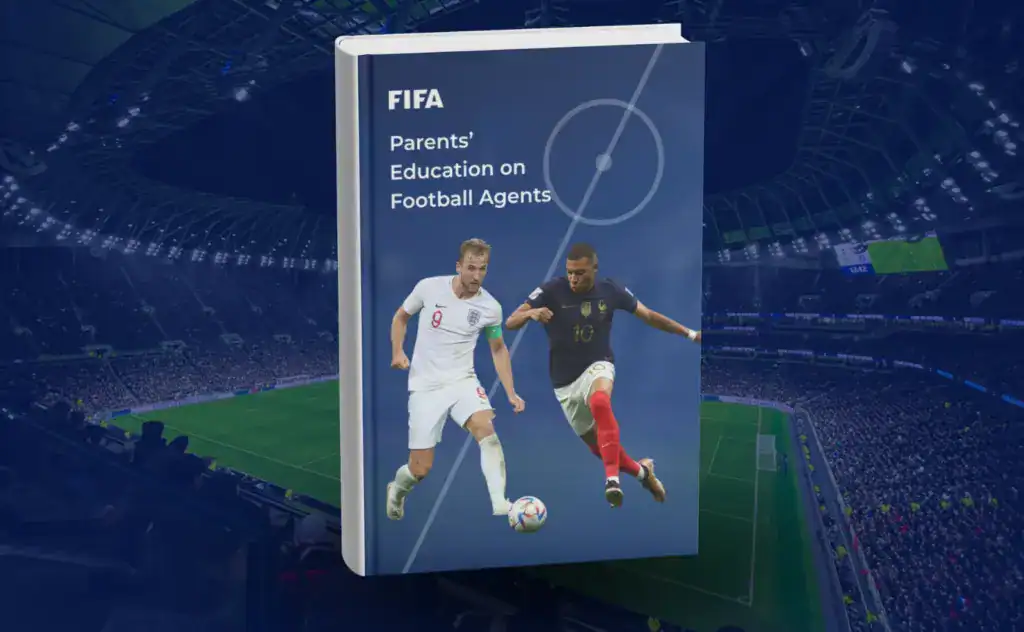
The “FIFA Parents’ Education on Football Agents” builds on the FIFA Guardians and FIFA Guardians Course 1 programs. With the growing number of agents and the increasingly early professionalization of young soccer players, FIFA has deemed it necessary to better inform families.
Parents play an important role in their children’s career decisions, but they may sometimes lack information about the rules, risks, and obligations related to agents.
The implementation of this FIFA program aims to address this information gap.
Let’s now take a closer look at FIFA Parents’ Education on Football Agents and what it includes.
FIFA Parents’ Education on Football Agents is an educational document published with the aim of clearly and effectively explaining how the agent profession works, as well as its regulatory framework.
It allows parents to better understand the applicable rules and the responsibilities of agents when a young soccer player is represented by a sports agent.
This FIFA program aligns with the FIFA Football Agent Regulations (FFAR), introduced to structure the player agent profession and strengthen the protection of soccer players, especially young players.
As its name suggests, this program is primarily intended for parents and legal guardians of young players, who may be exposed to the world of sports agents.
This document also targets individuals involved in player development such as:
FIFA Parents’ Education on Football Agents is structured into five major sections organized in a clear and progressive way, ensuring information, prevention, and support for families.
This first section sets the framework, explains the objectives of the program, and outlines FIFA’s role in regulating agents.
The introduction helps readers understand the purpose of this program, define the role of FIFA agents, and introduce the issues related to protecting young soccer players.
This section is a key pillar of the document. It supports parents in the early stages before entering into any collaboration with an agent. It covers the questions to ask before committing, the elements to verify about an agent, and the best practices to adopt.
In this section, FIFA provides five practical guides:
The third section focuses on signing an agreement with an agent, detailing the essential elements to understand before making any commitment.
This section includes two practical guides:
This section of FIFA Parents’ Education on Football Agents explains how the relationship between an agent and parents should develop over time. It emphasizes the importance of building a healthy relationship in the player’s best interest.
The section includes seven practical guides:
This final section of the program addresses how to end a collaboration with an agent. It explains the different possible situations, such as the natural end of a contract or its termination. The document also discusses changing agents and the elements to consider before making that decision.
Four practical guides make up this section:
FIFA Parents’ Education on Football Agents brings together all these practical guides in a single document to help families understand the rules and best practices.
To download FIFA Parents’ Education on Football Agents PDF, click here:

As seen in the soccer ecosystem with examples such as Lamine Yamal or Endrick, young players are becoming involved in professional career paths at increasingly early stages.
FIFA deemed it necessary to better regulate agent activity. This program is part of that objective, aiming to inform parents in order to protect young players.
Young soccer players are particularly vulnerable, which is why FIFA places their protection at the core of this program.
The document notably emphasizes the importance of the role of parents in decisions related to their child’s career.
“Parents must clearly understand the rules governing agent activity” - FIFA
FIFA’s Parents Education Program on Football Agents aims to provide families with the necessary tools to act and avoid any risky situations.
In the career of a young soccer player, a FIFA agent acts as an intermediary between their client, clubs, and stakeholders in soccer, while ensuring the protection of the young player’s interests within a regulatory framework established by FIFA.
The role of agents is even more sensitive when it involves minors, as it entails greater responsibility toward the player and their family.
A sports agent can intervene in different ways in a player’s career, particularly by negotiating contracts with clubs or advising the player and their family on career choices. The agent plays a true strategic advisory role and aims to optimize the player’s development within a long-term support approach.
An agent plays a key role in a player’s career but must strictly comply with FIFA regulations.
The main obligations of FIFA agents are as follows:
When representing minor clients, the rules are even stricter, particularly regarding contract signing and parental involvement.
An agent may only represent a minor player if they comply with several essential principles such as:
These requirements are part of FIFA’s broader protection approach, notably through the FIFA Guardians program. These concepts are explored in greater depth in the study materials for the FIFA agent exam.
The representation of a minor client therefore relies on a strict, transparent, and secure framework, with an essential role for parents at every stage.
FIFA Parents’ Education on Football Agents is an essential tool for better understanding the role of agents and structuring the support of young players. By providing practical guides, FIFA enables families to make informed decisions in an often complex environment, while strengthening transparency and security in relationships with agents.
This document highlights that parents play a key role, especially when the player is a minor, and that the activity of FIFA agents is now strictly regulated.
These concepts form a solid foundation for anyone wishing to operate within this ecosystem, particularly candidates for the FIFA agent exam, for whom mastering these rules has become essential.