Moussa Sissoko Agent: Who Is Ousmane Dembélé's Advisor?

Born on February 1, 1981, Will Salthouse is a British sports agent licensed by FIFA and registered with the Football Association. He set up his company in 2008 with a single client, renamed it Unique Sports Management in 2010, then initiated the 2021 merger that created Unique Sports Group, now ranked among the five largest soccer representation agencies in the world. A career path that shows an agent business can be built without a professional playing background, provided you clear the now unavoidable step of the FIFA license.
Last updated: 09/18/2026
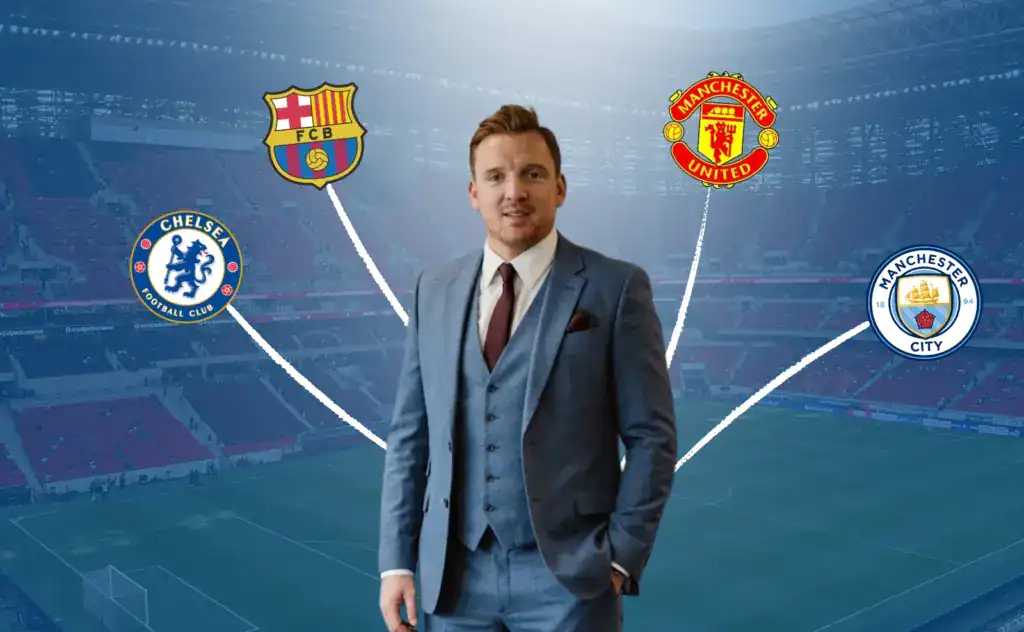
Most of the major soccer representation agencies were built around a former player, an already established name, or a family network. Will Salthouse comes from none of those backgrounds, he never played at the professional level, and nobody in soccer knew who he was when he filed his company's articles of incorporation in 2008, with a single client on his books.
A little under twenty years later, the firm he founded ranks among the five largest soccer representation agencies in the world. That gap between the starting point and the outcome is what makes his path useful to a future FIFA agent.
Let's take a closer look at how Will Salthouse became an agent, which players are associated with him, and what his career reveals about the agent business today.
William Salthouse is a British sports agent born on February 1, 1981. He lives and works in England, where he has been active since the mid-2000s. He is now the founder and co-CEO of Unique Sports Group, alongside Gordon Stipic-Wipfler.
He holds the FIFA agent license, which has been mandatory to represent a player or a club since the FFAR (FIFA Football Agent Regulations) came into force. He also appears on the FA (Football Association) intermediaries register, where he has been listed since at least 2015.
Will Salthouse almost never speaks publicly, and his communication is limited to his agency's official announcements.
Will Salthouse has no playing career behind him, and he was never a coach or a club executive either. His start in player representation came in the 2000s through his network, outside of any elite sporting background.
He began by working with English players from the corridor that links London to Watford, an area dense with professional clubs and youth academies. Will drew on two separate networks, one in soccer and one in horse racing, a world where owners, investors, and sports executives all cross paths.
The business took official form in 2008 with the creation of Will Salthouse Management Ltd, a company that carried his name and had just one client at the time. Two years later, it was renamed Unique Sports Management. The name change came with a new stage for the agency, which began to grow into a standalone brand capable of bringing in other agents.
For about a decade, Will Salthouse Management grew almost exclusively in the United Kingdom, with the Premier League and the Championship. The setup rested on a fairly classic model:
The agency began to change dimension in June 2019, when it handled Aaron Wan-Bissaka's move from Crystal Palace F.C. to Manchester United F.C. for approximately £50 million (approximately $65 million). That deal placed it on a high-profile transaction in the English market for the first time.
Between 2010 and 2025, Will Salthouse made three decisions that changed the nature of his organization. None of them involved a specific player, and all of them concerned what the agency was meant to become.
| Year | Decision | Objective Pursued | Effect on the Organization |
|---|---|---|---|
| 2010 | Rename Will Salthouse Management to Unique Sports Management | Separate the brand from the founder's name | Makes it possible to recruit other agents |
| 2021 | Merge with Germany's International Sports Management | Gain access to the Bundesliga rather than to an English competitor | Opens up player movement between the United Kingdom and Germany |
| 2025 | Open up the capital to Velocity Capital Management | Fund growth without giving up operational control | Introduces governance and reporting requirements |
None of these decisions has anything to do with negotiating deals, which nevertheless remains Will Salthouse's original line of work, but all of them have to do with company building, a skill that set him apart from other licensed agents.
Rather than absorbing a rival British agency, which would have thickened an already English portfolio, he chose a German partner positioned on the other major European market. The agency therefore gained direct access to the Bundesliga and placed itself on the player flows between the two leagues.
He has still managed to keep a seat at the table on the most exposed negotiations. In January 2026, he oversaw Marc Guéhi's move to Manchester City F.C., followed by Maxence Lacroix's move to Chelsea F.C. a few months later.
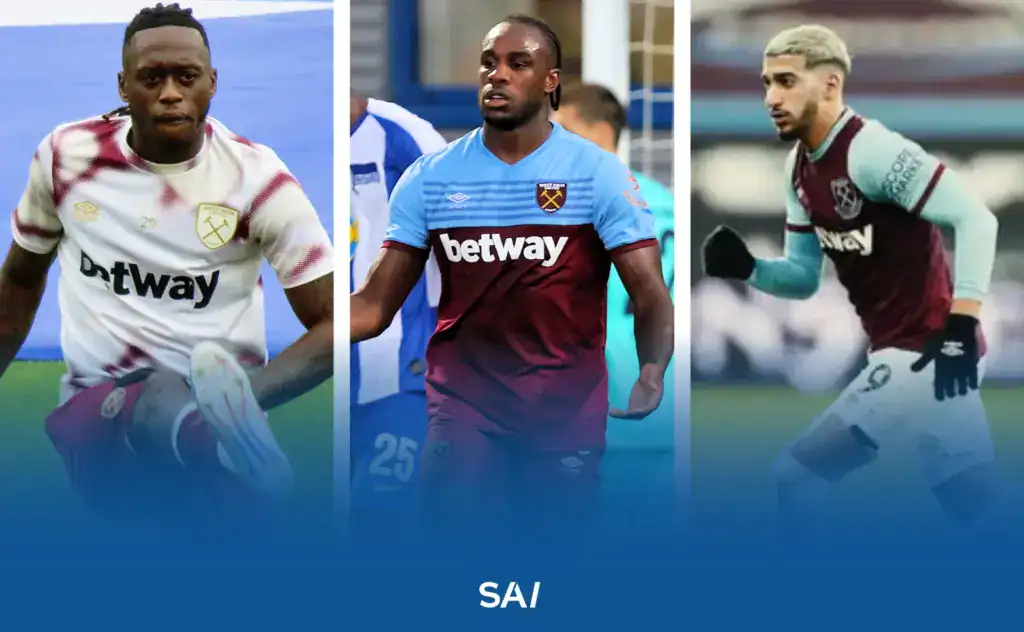
The portfolio of Will Salthouse's agency goes well beyond the players followed personally by its founder. Several names, however, are directly associated with Will Salthouse in the British press.
| Player | Position | Nature of the Link | Key Detail |
|---|---|---|---|
| Michail Antonio | Forward | Longtime client | Represented during his seasons at West Ham United F.C. |
| Jacob Ramsey | Midfielder | Current client | Moved from Aston Villa F.C. to Newcastle United F.C. in August 2025 |
| Aaron Wan-Bissaka | Right back | Deal handled by his agency | Crystal Palace F.C. to Manchester United F.C. in 2019 |
| Saïd Benrahma | Winger | Former client | Represented during his time at West Ham United F.C. |
The players associated with Will Salthouse match the agency's positioning, rather than a selection driven by market opportunities:
Maxence Lacroix, Marc Guéhi, and Anthony Gordon all fit that logic. These are players who are highly valued in the Premier League and who retain a high resale value, which strengthens the agent's position in negotiations.
What sets Will Salthouse's project apart is above all the way he structured his agency. He hired a director of soccer who came from a Premier League sporting department, a chief financial officer from a rival agency, and a head of data and recruitment. None of those roles is an agent's role.
That strategy answers a real constraint of the job: a single agent cannot follow his players, negotiate contracts, secure his mandates, and produce the analysis that justifies a valuation to a club.
Player representation has evolved over the years, and today most leading agents split those functions among several people. That is exactly what a player agency is for.
Three lessons stand out from this career for a FIFA agent exam candidate.
With no playing background, Will Salthouse first built his reputation on a specific market before positioning himself on the biggest deals. The clubs of the London–Watford corridor and the horse racing world served as his base for years. An agent starting out therefore has every reason to begin in the world where he already has legitimacy, rather than seeking direct access to the most visible clubs.
By focusing on a few positions and two leagues, Will Salthouse was able to build a more solid and more recognizable presence. English defenders and wide players correspond to a well-defined profile that recruiters end up associating with a name. Over time, that specialization was enough to make his name known among recruiters, without having to start from scratch on every deal.
Today, running an agency no longer rests on the relationship with players alone. Funding, governance, compliance, and data also take up an important place. The roles created around Will Salthouse confirm this, with a finance department, a data unit, and a head of recruitment. Working alone remains possible, but the independent agent then works on deals of a different nature from those handled by an organization of that size.
One nuance still needs to be taken into account in Will Salthouse's case. In 2008, no exam was required to represent a player in England, and the intermediary system introduced in 2015 remained very loose. Since the FFAR, the license governs access to the industry. A network opens doors, the license gives you the right to practice, and that is where the gap lies with the sports agent business as it was practiced fifteen years ago.
It is possible, and Will embodies that path completely.
Will Salthouse's career follows a fairly simple trajectory. An agent with no playing background, he started from a single client in 2008 and today runs one of the five largest soccer representation agencies in the world. To get there, he first worked on a specific market, developed a specialization, chose a merger to round out his activities, and opened up his capital to fund his growth while keeping control.
For a FIFA agent exam candidate, his career shows that it is possible to build your place without an inheritance or an already established network. What is missing at the start can be built, provided you clear one unavoidable step, which is obtaining your license.