Moussa Sissoko Agent: Who Is Ousmane Dembélé's Advisor?

On September 1, 2025, Alexander Isak joined Liverpool F.C. from Newcastle United F.C. for €145 million ($169 million), or £125 million, a Premier League record. Behind this move stands Universal Twenty Two, an agency still little known to the general public, based in the province of Buenos Aires, which also represents Luka Modrić and Emiliano Martínez.
The way it operates is of real interest to candidates preparing for the FIFA agent exam. The agency divides roles between licensed agents, an advisor and an operations team, while supporting players with very different career paths, from Argentina to the Balkans. Its organization and its way of working help explain how an agency gets involved in a transfer.
Universal Twenty Two, also known as Universal TT, is a soccer player representation agency. Its official headquarters are located in Vicente López, in the province of Buenos Aires, Argentina. It also has a presence in Barcelona, which serves as a base for its activities in the European market.
The Universal Twenty Two brand has been active since at least 2022, but the agency claims more than 25 years of experience in the industry, a track record that reflects the careers of its founders rather than that of the company itself. It presents itself as a big family that supports soccer players throughout their careers.
Behind this description, Universal Twenty Two promotes a “full service” model. Its services cover several areas:
According to Transfermarkt, the agency has 169 players under representation contracts, with a combined market value of around €300 million ($325 million).
This model is similar to that of most major player agencies, where negotiating a transfer is only one part of the job.
Universal Twenty Two was co-founded by Gonzalo Gaitán and Vlado Lemic. The two men do not hold the same roles, and this division of responsibilities largely explains how the company works.
Gonzalo Gaitán handles negotiations on a day-to-day basis, coordinates communication between the parties and moves discussions forward until the contract is signed.
Vlado Lemic, co-founder of the agency, brings a network built over more than twenty years with European clubs and decision-makers. He does not hold a FIFA agent license and presents himself as an advisor.
This division of roles is at the heart of how the agency operates. Players are represented by licensed sports agents, including Zoran Lemić, Vlado’s brother. Gustavo Goñi, who is also affiliated with the agency, represented Lucas Martínez Quarta, for example, during his move from River Plate to Fiorentina in 2020.
Some industry directories describe Vlado Lemic as a “lead agent,” but this title does not give him the status of a licensed agent. Only an agent who holds a license and is registered on the FIFA Agent Platform can officially represent a player in a transfer.
Universal Twenty Two relies on its base in Argentina and on the relationships its founders have built with European clubs, particularly in the Balkans and Western Europe. From its Argentine headquarters, the agency follows players from their very first professional seasons and prepares their move to other leagues.
Argentina is one of the leading exporters of soccer players, many of whom go on to join European clubs. Universal Twenty Two positions itself along this pathway by scouting talent locally, supporting players as they develop and drawing on its contacts in Europe to negotiate their moves.
Once the deal is done, the work continues. Arriving in Europe often means adapting to a new language, a different pace of competition and a different soccer culture. The agency offers relocation support in particular to help with this transition. The journey can also continue in the other direction, as shown by Lucas Martínez Quarta’s return to River Plate in 2025.
The agency’s portfolio, as shown on its official website, is organized around two pipelines, along with a segment dedicated to coaches.
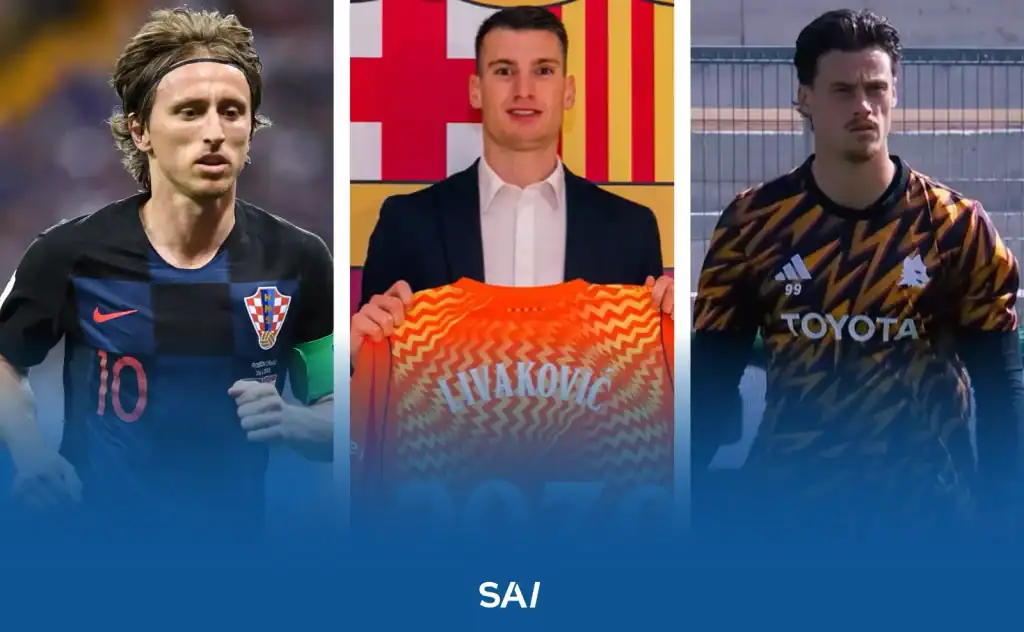
Luka Modrić, who now plays for AC Milan, is the agency’s best-known player. The 2018 Ballon d’Or winner illustrates the longstanding ties built with players from the former Yugoslavia. Universal Twenty Two also represents several internationals from the region:
The presence of two goalkeepers among these three players is also explained by the specific nature of the position. Spots are limited at each club, careers can last longer and moves are less frequent than for other positions. Supporting these players therefore requires a solid understanding of clubs’ needs and of the expectations of their sporting directors.
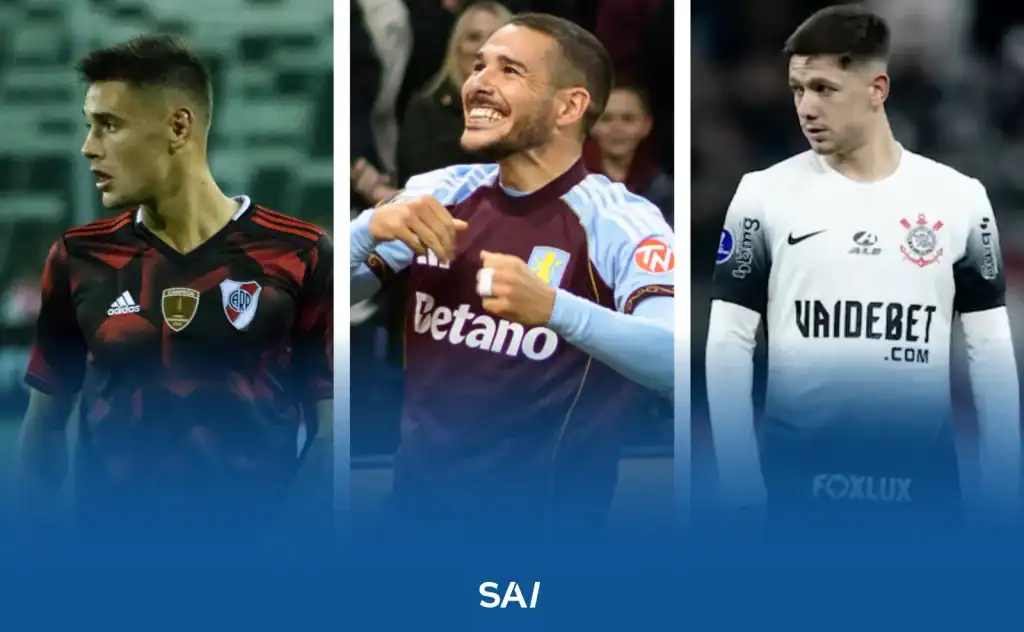
The second pipeline brings together several Argentine players with a range of profiles. An international center back, Lucas Martínez Quarta played in Europe before returning to his youth club. Emiliano Buendía, an attacking midfielder, has also built his career in Europe, while Lucas Ariel Boyé and Rodrigo Garro play as a forward and an attacking midfielder, respectively. Nahuel Tenaglia represents another profile, that of a player who has established himself in the Argentine league.
These players show that the agency does not focus solely on moves to Europe. It also supports players who stay in South America or who return there after a stint abroad, following their careers at different stages.
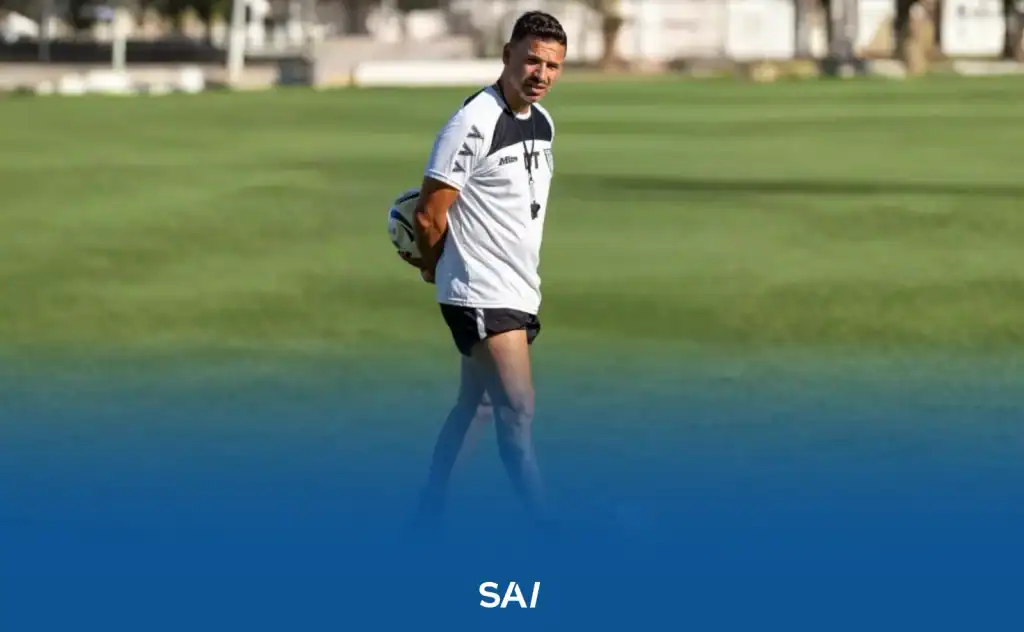
The “DTs” section of the official website, short for directores técnicos (“technical directors”), lists four coaches. Martín Palermo, Boca Juniors’ all-time leading scorer, Facundo Sava and Lucas Pusineri are listed as head coaches. Martín Perelman is listed as an assistant coach.
Although it is less visible than player representation, representing coaches involves very specific issues. Their contracts are often shorter and mid-season coaching changes are frequent, which makes termination and compensation clauses particularly important. A player agent may also negotiate the arrival of the staff members who accompany the head coach, which explains why the agency’s portfolio also includes an assistant coach.
For an agency, having coaches under representation contracts also helps maintain a direct line to locker rooms and sporting management.
Alexander Isak’s move to Liverpool F.C. shows how the agency organizes itself. Completed on September 1, 2025, it cost £125 million excluding add-ons, or approximately €145 million ($169 million), with a total that could reach £130 million (approximately €150 million, or $176 million). It is the most expensive transfer in Premier League history, with clearly defined roles for each party involved.
| Role | Person | Status | Responsibility in the Deal |
|---|---|---|---|
| Representative | Zoran Lemić | FIFA-licensed agent | Official representation of the player |
| Advisory | Vlado Lemic | Co-founder, unlicensed advisor | Network, strategy, relationships with decision-makers |
| Operations | Gonzalo Gaitán | Co-founder | Day-to-day handling of negotiations |
| Partnership | Sven Mislintat | External partner | Relaying official communication with the clubs |
A transfer of this size involves several professionals, covering strategy, negotiation and legal support. However, the regulatory framework specifies that only the licensed agent may officially represent the player.
Beyond the Isak deal, several recent transactions associated with the agency reflect the diversity of the markets in which it operates, in an increasingly globalized transfer market.
| Year | Player | Deal | Reported Fee |
|---|---|---|---|
| 2023 | Dominik Livaković | Dinamo Zagreb to Fenerbahçe | €6.65 million |
| 2024 | Rodrigo Garro | Talleres to Corinthians | approximately €6.5 million ($7 million) including bonuses and performance targets |
| 2024 | Yankuba Minteh | Newcastle United F.C. to Brighton & Hove Albion F.C. | approximately €35 million ($38 million), or £30 million, five-year contract |
| 2025 | Lucas Martínez Quarta | Fiorentina to River Plate | approximately €7 million, according to press reports |
| 2025 | Alexander Isak | Newcastle United F.C. to Liverpool F.C. | £125 million excluding add-ons (approximately €145 million, or $169 million) |
Livaković’s move to Turkey, Minteh’s move between two English clubs and Martínez Quarta’s return to Argentina cover three leagues and three different economic realities. The Martínez Quarta case also shows that an agency supports a player at the end of their European career, not only when they leave for Europe.
The Garro deal is also worth noting for what happened after the transfer. Payment was scheduled in several installments, but Talleres took the matter to FIFA after late payments. The Players’ Status Chamber of the FIFA Football Tribunal then ordered Corinthians to pay the amounts due, with interest. The two clubs later reached an agreement to settle the debt, in a dispute that concerned only them and to which the agency was not a party.
The case is a reminder of how important payment clauses are in a transfer agreement. Payment schedule, late-payment interest, guarantees, conditions that trigger bonuses: every detail can become decisive if the buying club runs into financial trouble.
The way Universal Twenty Two operates is, first and foremost, a reminder of the importance of licensed agents. Even when the founders have a strong network and extensive experience, it is the licensed agents who sign representation contracts and act officially in transfers.
The network remains just as important, because relationships built over the years make it easier to deal with clubs and their executives, but they do not replace the license. The FIFA Football Agent Regulations reserve the representation of clients for licensed agents, even though several of their provisions, notably on service fee caps, have been suspended worldwide since FIFA Circular No. 1873.
The agency’s activity also shows just how international the agent business is. In just a few years, the deals it has been involved in have concerned Argentina, England, Turkey, Brazil and Italy. An agent must therefore know the rules on international transfers set out in the RSTP (Regulations on the Status and Transfer of Players), but also understand how disputes between clubs from different countries are resolved.
Representing coaches is another business line in its own right. This market appears less competitive, but it requires a strong knowledge of clubs and their needs. Like international transfers and the rules governing the industry, these topics are part of the FIFA agent exam syllabus.
Other agencies have chosen a different model, such as Gol International, built around Pini Zahavi and his personal network. In every case, the principle remains the same. A network makes contacts easier, but only the license allows an agent to officially represent a player in compliance with the rules.