FIFA Football Tribunal Report 2025/26: A Comprehensive Guide for Aspiring Agents

The Global Transfer Report 2025, published by FIFA, provides an in-depth analysis of the global soccer transfer market. Through data-driven insights from the FIFA TMS, this report highlights the economic, geographic, and contractual trends of professional and amateur soccer. A reference document for sports agents and candidates for the FIFA agent exam.
Last updated: 05/11/2026
The Global Transfer Report 2025 is FIFA’s flagship publication on the international soccer transfer market. Based on data from the FIFA Transfer Matching System (TMS), it provides a detailed, data-driven look at how players move between clubs worldwide over a full calendar year.
For anyone preparing for the FIFA Soccer Agent Exam, this report is not just a set of numbers. It is a practical bridge between the regulatory framework you study in the official materials and the way the international transfer system actually operates in the real world.
This article breaks down what the Global Transfer Report 2025 contains, highlights its key figures and trends across men’s, women’s, and amateur soccer, and explains how candidates can use it strategically when preparing for the FIFA agent exam.
The Global Transfer Report 2025 is an annual analytical study produced by FIFA. It is built on transactional data recorded in the FIFA Transfer Matching System (TMS), the mandatory online platform used by member associations and clubs to process international transfers and related documentation.
All data in the report relates to international transfers—moves between clubs affiliated to different national associations—completed during the 2025 calendar year. The report consolidates and analyzes:
Crucially, the report covers three broad segments of the global game:
Taken together, these segments give a 360-degree view of the international player market and the way the current regulatory framework shapes mobility.
The report is organized so that readers can easily isolate trends in a specific segment of the market while still understanding how everything fits within FIFA’s global regulatory architecture. It is composed of four main parts.
The opening section sets out the regulatory context in which the 2025 transfer year takes place.
A key feature here is the explanation of the interim regulatory framework adopted by FIFA following the Court of Justice of the European Union (CJEU) decision in the Lassana Diarra case. That judgment found that certain provisions of the FIFA Regulations on the Status and Transfer of Players (RSTP)—especially those concerning compensation for breach of contract, joint and several liability, and restrictions linked to the International Transfer Certificate (ITC)—were incompatible with EU law on competition and free movement.
In response, FIFA introduced interim amendments to the RSTP and to the Procedural Rules of the Football Tribunal, clarifying:
For FIFA agent candidates, this part of the report is valuable because it shows how a major court ruling can trigger rapid regulatory adjustments and how those changes filter directly into transfer practice during the following windows.
The second part focuses entirely on the men’s professional market, which still accounts for the overwhelming majority of transfer spending worldwide.
This section provides:
In addition, the men’s section highlights:
For agents, these findings are a practical map of where demand and liquidity are concentrated, and which routes are most active for player careers.
The third part of the report is dedicated to women’s professional soccer, a segment that continues to grow at double-digit rates year over year.
The 2025 edition emphasizes several major developments:
This section confirms that women’s soccer is moving rapidly from a semi-professional or underfunded status in many countries to a more structured, investment-driven market, where transfer fees and long-term career planning for players are increasingly the norm.
The final section addresses amateur players moving across borders. Even though these transfers largely take place without transfer fees, they represent a huge volume of international mobility:
This part of the report examines:
For future agents, this is a crucial reminder that cross-border movement is not limited to elite professionals. Many clients will begin as amateurs or semi-professionals whose career paths cross borders long before their first major contract.
The 2025 report confirms that the global transfer market has reached new historic highs in terms of volume and spending.
According to FIFA, 86,158 international player transfers were completed in 2025 across men’s and women’s professional and amateur soccer—an all-time record. For the first time, total spending on international transfer fees surpassed the USD 10 billion mark, reaching around USD 13.11 billion.
These numbers underline two dynamics:
In the men’s professional game, the Global Transfer Report 2025 highlights the following key figures:
The report also notes:
In terms of headline moves, several major international transfers grabbed attention in 2025. Based on widely reported fees, some of the largest included:
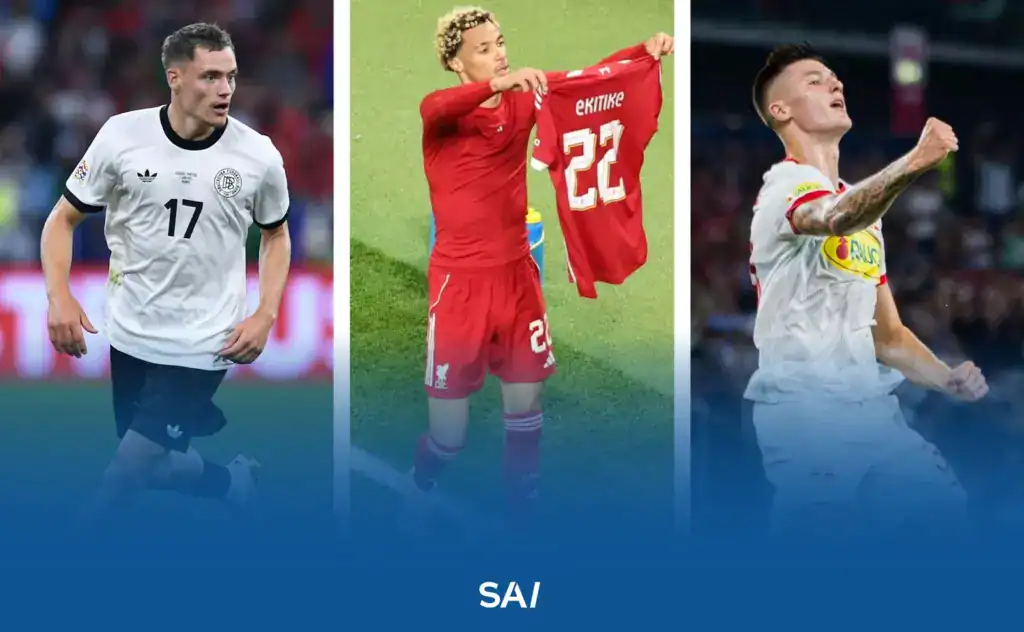
These transfers illustrate a key exam-relevant pattern: elite deals are a small fraction of total transfers but account for a disproportionate share of global spending. Understanding how such deals are structured—release clauses, sell-on percentages, performance bonuses, solidarity contributions—is essential knowledge for agents operating at the top end of the market.
The 2025 report shows that while spending in women’s professional soccer remains a small fraction of the men’s market, growth rates are significantly higher:
These numbers are underpinned by a series of landmark transfers that pushed women’s fee benchmarks upwards throughout the year, including:

Taken together, the data and these high-profile deals send a clear message: women’s soccer is moving into a phase where transfer fees, long-term contracts, and multi-year career planning are becoming standard at elite level. For agents, this means that knowledge of the women’s market is no longer optional—it is a genuine growth opportunity.
At amateur level, the Global Transfer Report 2025 underlines just how large the base of the pyramid has become:
The report highlights that:
For aspiring agents, the amateur segment is a reminder that:
| Category | Total number of transfers | Transfer fee amounts | Clubs involved |
|---|---|---|---|
| Men’s professional soccer | 24,558 | $13.08bn | 5,283 clubs involved |
| Women’s professional soccer | 2,440 | $28.5m | 756 clubs involved |
| Amateur soccer | 59,162 | N/A (mostly without transfer fees) | 25,500+ |
| Total global market | 86,158 transfers | ≈ $13.11bn | - |
Although the Global Transfer Report 2025 is not one of the official core documents for the FIFA Soccer Agent Exam, it is an extremely useful complementary resource. It allows candidates to connect abstract regulatory provisions with real-world behavior in the market.
Here are several concrete ways the report helps you prepare more effectively.
The FIFA study materials set out the rules on:
The Global Transfer Report shows how often and in what forms these rules come into play in practice.
For example:
A rising share of transfers with fees (17.7% in the men’s game) shows where compensation-related rules and add-on structures (sell-on clauses, bonuses) are relevant day to day.
The high volume of amateur and youth transfers underlines why FIFA is tightening rules on the international movement of minors and why agents must understand exceptions and safeguards.
Using the report, you can build realistic case studies instead of relying purely on hypothetical examples.
The report’s confederation- and association-level breakdowns show:
For a future agent, this is invaluable for:
Even if the exam does not directly test you on the Diarra decision, the interim regulatory framework adopted in response is now part of the environment in which agents operate.
The report’s introductory section helps you:
This context is especially useful for open-ended exam questions or practical scenarios that ask you to advise a player or club.
The Global Transfer Report is also a commercial intelligence document:
As a prospective FIFA agent, you can use this to:
The Global Transfer Report 2025 is an official FIFA publication and is typically available:
When studying for the exam, it is useful to:
To download the Global Transfer Report 2025 PDF, click here:

The Global Transfer Report 2025 highlights a transfer market experiencing strong growth, still largely dominated by men’s soccer, yet increasingly shaped by the rise of women’s soccer and growing mobility at the amateur level.
Through official and structured data, the Global Transfer Report 2025 provides a clear overview of how the international transfer system works.
For a player agent, this report complements the detailed analysis provided by sports market research platforms such as the Transfermarkt portal, which allows real-time tracking of player movements and market values.
For aspiring FIFA agents, this study conducted by FIFA is an essential reference for understanding market mechanisms and approaching the exam with a practical and comprehensive perspective. knowing the rules on paper to understanding how they play out across thousands of real-world deals every year.