Gol International: Pini Zahavi's Agency, Its Players, and Its Business Model

Discreet yet ever-present behind the scenes, Pini Zahavi is one of the most influential agents in modern soccer. From his beginnings in journalism to his key role in some of the biggest transfers, explore the career, methods, and impact of a central figure in the FIFA agent market.
Last updated: 05/07/2026
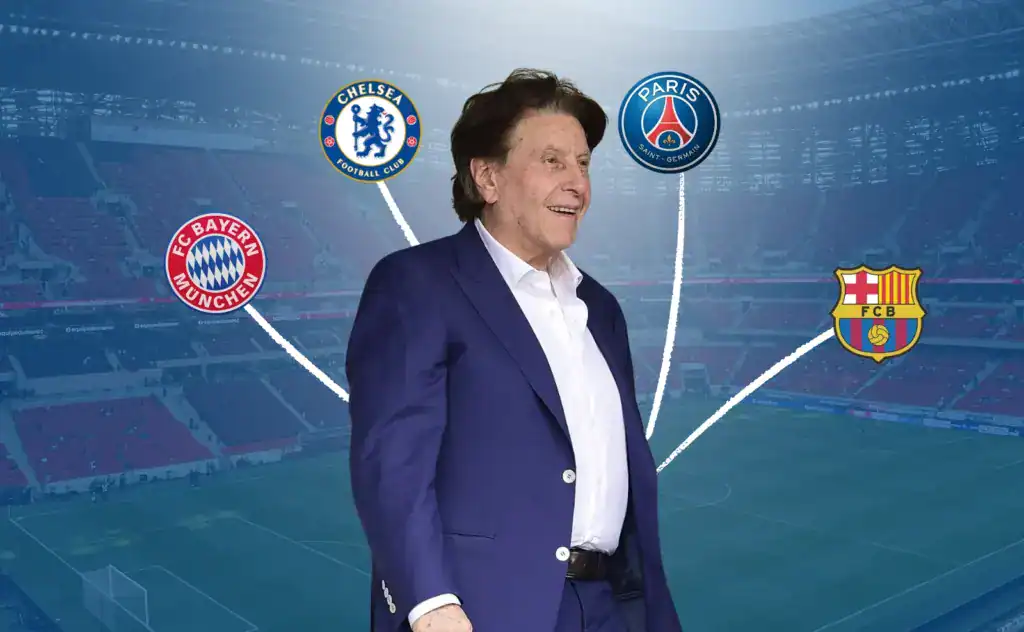
Among the many FIFA-licensed agents active in professional soccer worldwide, certain names transcend conventional representation to become defining institutional figures across multiple eras. Pini Zahavi stands as one of them—a strategist who has engineered transformative deals throughout soccer’s modern landscape, despite deliberately remaining outside the constant media spotlight. His influence extends far beyond securing player transfers; he has helped reshape how elite clubs operate at the intersection of sporting ambition, ownership strategy, and financial architecture.
The name Pini Zahavi may not dominate mainstream soccer commentary, yet his fingerprints mark some of the sport’s most consequential moments. From brokering record-breaking transfers to facilitating billionaire investment into historic clubs, Zahavi has authored a career that exposes the hidden mechanics of the global game at its highest level.
Born in 1955 in Ness Ziona, Israel, Pini Zahavi arrived at agent representation through an unconventional pathway that fundamentally shaped his approach. Rather than following the traditional educational route in law, management, or business administration, Zahavi first built his career in sports journalism, working for leading Israeli outlets such as Hadashot Hasport, Yedioth Ahronoth, and Hadashot. This journalistic background proved invaluable: while covering professional soccer, he gradually built a deep network of contacts among club executives, coaches, and decision-makers across Europe.
Pini Zahavi began negotiating deals informally while still a journalist, arranging his first significant move in 1979 when he helped facilitate Israeli defender Avi Cohen’s transfer from Maccabi Tel Aviv to Liverpool, earning an introduction fee rather than a full agent commission. Through the 1980s and 1990s he continued to expand his network by organizing friendly games in Israel, hosting high-profile coaches like Graeme Souness and Kenny Dalglish, and staying close to English clubs during their European and pre-season activities. He eventually left journalism in 1998 and fully pivoted into agency and intermediary work, turning the access and trust he had built as a reporter into a powerful commercial platform.
Over the years, Pini has become a central figure in modern soccer’s evolution, especially recognized for orchestrating complex transactions involving multiple stakeholders, sensitive political or regulatory environments, and enormous financial stakes. He played a pivotal role in Roman Abramovich’s acquisition of Chelsea in 2003, helped shape Rio Ferdinand’s record-breaking moves in the early 2000s, and later emerged as a key architect in the Neymar-to-PSG deal in 2017, still one of the sport’s landmark transfers. His influence fits into a broader vision of soccer where sporting decisions, ownership goals, media narratives, and financial returns are tightly interconnected—far beyond the narrow scope of traditional player representation.
Pini Zahavi operates with a very different profile and business model from most conventional agents. While many agents prioritize building large client lists and maximizing deal volume, Zahavi focuses on high-impact, high-stakes operations where the outcomes can alter a club’s sporting project or a player’s global profile. His work often involves not just negotiating a contract but engineering the entire context that makes a deal possible.
Pini Zahavi tends to step in when negotiations are multi-layered and politically sensitive—situations involving big transfer fees, complicated ownership structures, media scrutiny, or internal club politics. In these scenarios, clubs and players are not just looking for an agent but for a mediator capable of balancing competing agendas. His work typically requires:
A clear example came with the Neymar-to-PSG transfer in 2017, where Zahavi played a central role in structuring the operation around the $260 million release-clause payment that unlocked the deal and reset the global transfer market. In such moves, his primary contribution is not simply “placing a player,” but making a seemingly impossible transfer structurally and politically feasible.
Unlike sports agent who focus almost exclusively on players, Pini Zahavi often acts as an intermediary spanning several layers of the game: clubs, investors, coaches, executives, and even, at times, governing bodies. He has been involved not only in player moves but in ownership changes, coaching appointments, and long-term squad-building strategies.
This multi-level involvement gives him a panoramic view of the professional game. He can see how one transfer affects a club’s wage structure, commercial strategy, and sporting cycle, and how that in turn influences future recruitment. That is why many insiders describe him less as a pure agent and more as a hybrid between a super agent and a strategic consultant for elite soccer organizations.
Modern soccer is heavily financialized, and Pini Zahavi’s role often resembles that of a high-level advisor rather than only a negotiator. He has longstanding relationships with owners and executives at clubs across England, Germany, Spain, and beyond, and has repeatedly been involved when new investors enter the game or when clubs attempt to pivot their sporting direction.
A defining example was Roman Abramovich’s purchase of Chelsea in 2003. Chelsea were in serious financial difficulty, and Zahavi helped connect the club’s leadership with Abramovich, shaping an ownership transition that transformed both the club and the wider Premier League. Similar patterns have appeared in subsequent decades, with Pini positioned as the person who can bring clubs, potential buyers, and top players or coaches into the same room and structure deals that satisfy all sides.
Pini Zahavi has never built his reputation on sheer volume of clients. Instead, he has targeted high-profile players and coaches—often at decisive moments in their careers—where his experience and network can maximize the impact of a move. Over time, this selective approach has allowed him to concentrate his influence on deals that shape the competitive balance at the top of the game.
Historically, he has been associated with players such as Rio Ferdinand and Didier Drogba at key moments, and he has often been involved in major transfers even when he is not listed as the official agent of record. In some cases, he works in the background as a strategic advisor rather than the primary registered intermediary..
Below are some of the most notable figures currently associated with Pini Zahavi’s agency or advisory work, based on recent reporting and public records:
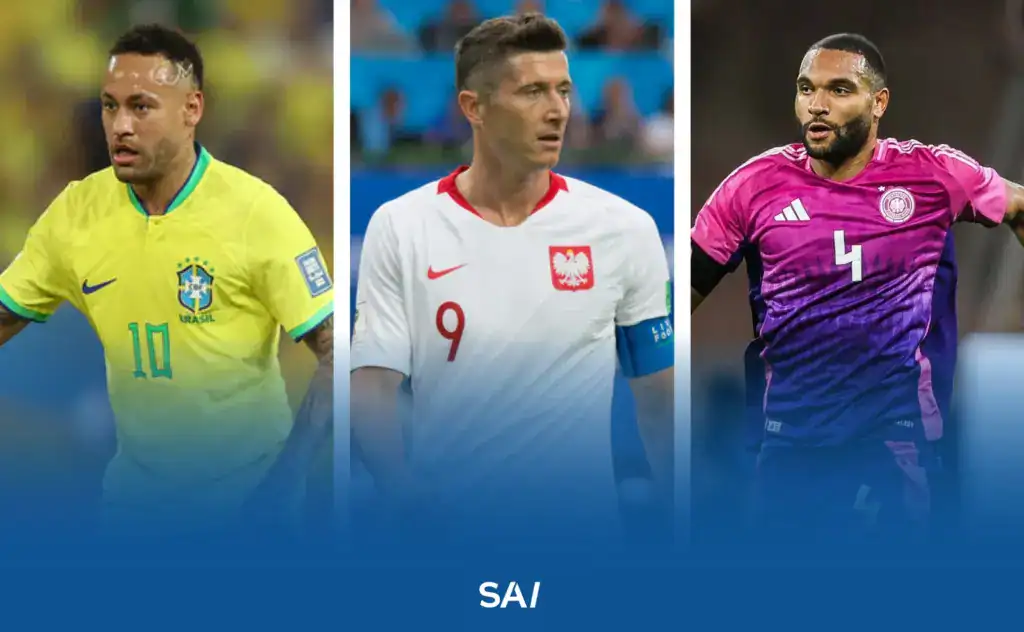
Neymar’s 2017 move from Barcelona to PSG remains one of the defining transfers of modern soccer, with Pini Zahavi central to structuring the $260 million deal through the activation of his release clause. While Neymar is now back at Santos and primarily represented by his father as his main agent, Zahavi’s role in orchestrating that historic transfer cemented his status as a super agent who can move megastars in ways that reshape the global market.
Lewandowski is one of the most prolific strikers of his generation, and his switch from Bayern Munich to Barcelona in 2022 showcased Zahavi’s ability to manage high-profile, late-career moves for elite players. Pini Zahavi advised and represented Lewandowski during the negotiation process, with reports indicating a $50 million fee plus a substantial commission structure reflecting the forward’s commercial and sporting value. The move underlined a long-term strategy focused on legacy, continued Champions League relevance, and carefully managed media image.
Nkunku’s development from promising PSG academy graduate to one of Europe’s most versatile attackers is the type of career curve that aligns with Pini Zahavi’s portfolio. After a spell at RB Leipzig and then Chelsea, he completed a permanent $50 million transfer to AC Milan in 2025, signing a long-term contract and becoming a central piece of Milan’s attacking rebuild. Zahavi’s involvement in this move reflects his ongoing influence in repositioning top-level talent within Europe’s biggest leagues.
German international center back Jonathan Tah joined Bayern Munich from Bayer Leverkusen in 2025, with reports indicating a major defensive investment and a multi-year contract. The move fits a pattern where Zahavi is involved when top clubs look to secure proven domestic internationals to anchor their back line, reinforcing his track record in shaping elite defensive units.
After his spell at Bayern, Leroy Sané completed a high-profile move to Galatasaray in 2025, joining as a marquee signing for the Turkish giants and instantly becoming one of the most high-profile players in the Süper Lig. The transfer illustrates another side of Zahavi’s strategy: guiding experienced international stars toward ambitious projects outside the traditional “big five” leagues when the sporting and financial packages align.
Pini Zahavi’s influence is not limited to players. In 2024, former Bayern Munich and Germany coach Hansi Flick appointed Zahavi as his agent, and Zahavi was pivotal in Flick’s eventual arrival as FC Barcelona head coach. Reporting indicates that Pini hosted key meetings at his home and acted as a bridge between Flick and Barça executives, which demonstrates how he operates at the junction of coaching appointments, club politics, and long-term sporting strategy.
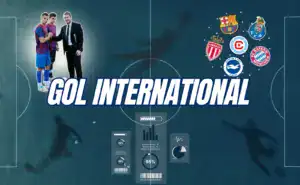
Pini Zahavi is the founder of Gol International, his agency structure designed to focus on high-value, strategically sensitive cases rather than large-scale, day-to-day representation. Gol International is intentionally built around a small core staff supported by external specialists—lawyers, financial experts, and local intermediaries—who are brought in when a specific deal demands their expertise. This setup promotes confidentiality and flexibility, both essential when handling negotiations involving ownership changes, superstar transfers, or politically sensitive situations.
Gol International and related entities are registered in jurisdictions such as Gibraltar and other international financial hubs, reflecting the complex cross-border nature of modern soccer business and the need to manage tax, regulatory, and contractual issues across multiple countries. This sports agent agency model differs sharply from large, media-facing agencies that emphasize branding and social media visibility; instead, his organization is built to prioritize discretion, direct relationships, and the ability to move quickly when a unique opportunity appears.
This philosophy explains why he has remained influential across different eras of the game. Rather than chasing exposure, Zahavi has built a reputation for making very complicated deals happen, often in the background and often involving multiple parties who might not otherwise reach an agreement.
He has also been linked to contentious episodes such as “tapping-up” investigations and disputes over agent commissions, including the Ashley Cole case and discussions around Rio Ferdinand’s contract situation in the mid-2000s, although he has denied wrongdoing and often operated outside direct FA jurisdiction as an international intermediary.
Given the scale and sensitivity of the deals he has worked on, it is unsurprising that Zahavi’s name often appears in debates about regulation, transparency, and the power of agents in modern soccer. He commands respect among many club executives for his deal-making abilities but also attracts criticism and suspicion, especially when he appears to sit between multiple sides of the same negotiation.
Zahavi’s role in Roman Abramovich’s acquisition of Chelsea is a recurring reference point. Though not an official club executive, he was instrumental in connecting Abramovich with Chelsea’s leadership and assisting with the wave of signings that followed the takeover.
Reports from that period suggest he earned significant fees for his work on both player transfers and strategic introductions, which quickly raised questions about how much influence one intermediary should have over a club’s sporting direction.He has also been linked to contentious episodes such as “tapping-up” investigations and disputes over agent commissions, including the Ashley Cole case and discussions around Rio Ferdinand’s contract situation in the mid-2000s, although he has denied wrongdoing and often operated outside direct FA jurisdiction as an international intermediary.
Pini Zahavi’s long-standing relationships with owners and presidents—such as Abramovich at Chelsea, decision-makers at PSG during the Neymar era, and Barcelona leadership during Lewandowski and Flick negotiations—have reinforced the perception that he is more than a player agent. To critics, that proximity raises concerns about conflicts of interest and about agents holding too much sway over club strategy. To supporters, it simply reflects his value as a trusted advisor who understands both the sporting and business dimensions of the game.
Pini Zahavi’s story is a reminder that there is no single template for becoming a successful agent in modern soccer. His journey from sports journalist to super agent highlights a set of principles that can be instructive for aspiring intermediaries.
Understanding clubs from the inside: His journalism background and decades of proximity to clubs have given him a deep sense of how organizations function—board dynamics, internal politics, and financial constraints. That institutional knowledge allows him to pitch realistic solutions that executives are willing to accep.
Regulatory awareness and longevity: Despite periodic scrutiny, Zahavi has remained active for decades, which underscores how crucial it is for an agent to understand FIFA, national association, and league regulations well enough to avoid sanctions that could end a career.
Pini Zahavi is Israeli. He was born in Ness Ziona, Israel, in 1942 according to sources, and began his professional career there.
Pini Zahavi is a well-known soccer agent, often referred to as a “super-agent” due to his immense influence. Before becoming one of the most powerful intermediaries in global sports, he worked for many years as a sports journalist for major Israeli newspapers.
Pini Zahavi is internationally renowned for orchestrating some of the biggest transfers and club acquisitions in soccer history. He is credited with playing a key role in the 2003 purchase of Chelsea by Roman Abramovich, as well as Neymar’s record-breaking transfer from FC Barcelona to PSG in 2017.
Nicknamed “Mr. Fix-It”, Pini is known for his ability to resolve complex contractual situations and connect the wealthiest figures in the sport.
Pini Zahavi represents several global stars, most notably striker Robert Lewandowski. His agency, Gol International, also manages top-level players such as Christopher Nkunku, Leroy Sané, and Jonathan Tah.
Over several decades, Pini Zahavi has established himself as one of the defining agents of modern soccer without ever chasing media stardom. His role in landmark transfers, his central part in ownership changes, and his ability to operate in complex, politically charged environments have helped redefine what a soccer agent can be.
For aspiring FIFA agents and established professionals alike, Pini Zahavi’s example shows that lasting success rests on a mix of long-term relationship building, deep understanding of club governance and finance, and strict attention to regulatory frameworks. In an era where the game is increasingly shaped by financial and institutional forces, his career is a case study in how one individual operating largely behind the scenes can leave a lasting imprint on the global soccer landscape.