Moussa Sissoko Agent: Who Is Ousmane Dembélé's Advisor?

A former professional soccer player is the only license candidate who has experienced the agent-player relationship from the client's side. This experience is a solid starting point, but it does not grant any exemption. Moving from soccer player to FIFA agent requires filling in legal knowledge gaps, meeting the FFAR eligibility requirements, and passing the official exam.
Last updated: 09/25/2026
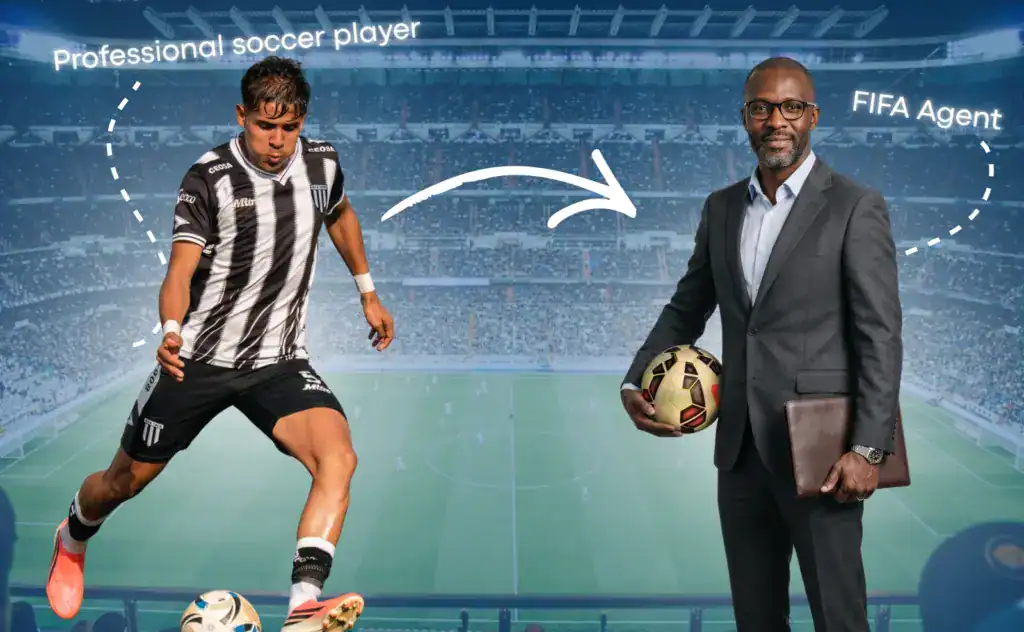
A professional soccer player has always experienced the agent business from the client's side. They have signed contracts negotiated on their behalf, waited for updates while sidelined by an injury, and sometimes learned late in the game that a club was interested in them. Moving from soccer player to FIFA agent allows them to draw on firsthand experience of the job and of the relationship between a player and their agent.
This article explains what drives a former player to choose a career as a sports agent, the skills they still need to acquire, and what the FIFA agent exam requires from this particular type of candidate.
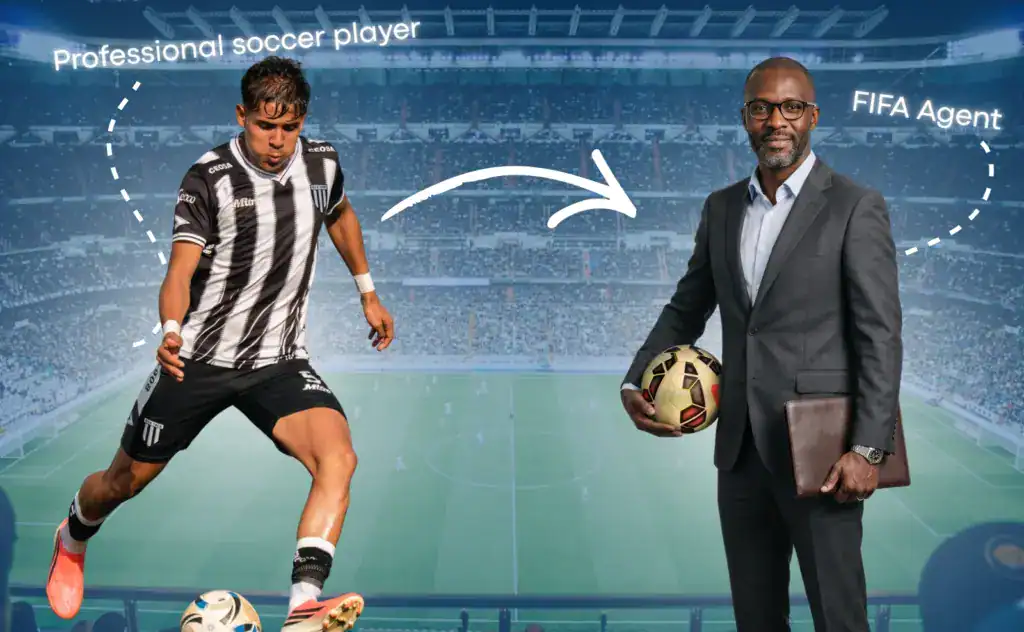
A playing career ends long before retirement age, and not every former professional becomes a coach or a pundit. Working as a player agent makes it possible to stay at the heart of the transfer market without going through the dugout.
The idea may take shape during a long-term injury or when a contract ends without an extension. That is a good time to start planning the next chapter and to begin training for a career as an agent. The FIFA agent license will have to wait, however, since the FFAR does not allow a player who is still under contract with a club to obtain one.
Some former players were well represented and want to replicate that model, while others dealt with agents who were rarely around when it mattered most. Either way, the former player already understands the relationship between a player and their agent. They are simply preparing to switch sides and take on that role themselves.
The lawyer brings legal expertise, the coach brings knowledge of the locker room, the sporting director brings experience of contracts from the club side, and the journalist brings a network in the media. The former player, for their part, has firsthand experience of the relationship between a player and their agent.
A former player knows what they expected from their agent, what they actually got, and what was missing. They also know the moments when an agent needs to be present, especially during transfer windows or when an injury complicates the situation.
This experience makes it easier to understand several FFAR rules designed to protect players. A representation agreement cannot exceed two years and cannot be renewed automatically. A separate written document must state whether the player sought independent legal advice before signing. For a former player, these rules take on special meaning, since they have experienced them firsthand as a client.
Every club along the way creates new relationships. Former teammates go on to become coaches, scouts, or sporting directors, and contact can also be maintained with the young players they shared a locker room with at the end of their career. This network can make it easier to engage with players as well as with clubs.
However, an agent may not approach a player who is already bound to another agent by an exclusive representation agreement, except during the last two months of that agreement. Knowing a former teammate makes contact easier, but it does not guarantee that they will become a client.
For a player, a negotiation is intertwined with the fear of getting injured before signing, a family relocation, or questions about playing time. A former professional has been through these moments and knows that a player sometimes turns down a better offer to stay close to their loved ones.
This understanding does not replace technical skills, but it helps the agent advocate for what the client actually wants, not what the agent imagines on the client's behalf.
A former player knows soccer from the inside, but certain aspects of the agent business still need to be learned, particularly on the legal, administrative, and business development sides.
A soccer player has often signed contracts without negotiating the clauses themselves, whereas an agent needs to understand their legal consequences. Issues such as termination with just cause, the protected period, and sporting sanctions fall under the RSTP (Regulations on the Status and Transfer of Players), a text that must be mastered for the FIFA agent exam.
At a club, the paycheck arrives every month and a large part of day-to-day life is taken care of. An agent experiences the opposite: irregular income, a business structure to choose, and invoicing and taxes to manage. They must also maintain their license by paying an annual fee and completing their continuing education credits every year.
Convincing a player to entrust their career to a first-time agent requires a business development approach that few former professionals have ever practiced. To represent a minor, the agent must first complete FIFA's dedicated training. They may then approach the player only starting six months before the age at which the player can sign their first professional contract, and only with the prior written consent of the player's legal guardian.
These skills can be acquired gradually, starting with law, which plays a major role in the exam.
Article 5 of the FIFA Football Agent Regulations sets out the conditions that must be met to obtain and keep a license, from the moment the application is submitted and throughout the agent's entire career. Some of these conditions directly concern former players, particularly when they still have ties to a club or carried out certain activities before obtaining their license.
| Situation | Impact on the License | Key Point to Watch |
|---|---|---|
| Current contract with a club | License not possible | For FIFA, the player is an employee of the club |
| Shares in the club that trained them | Ineligibility | Regardless of the percentage held |
| Investment in an academy | Ineligibility | Same rule as for a club or a league |
| Simple membership in a member-owned club | No obstacle | Personal membership limited to one vote |
| Suspension of at least two years for an ethics violation | Ineligibility | Even if the sanction was imposed on them as a player |
| Negotiation conducted for a former teammate before obtaining the license | Ineligibility for 24 months | Introducing a player to a club with a view to signing already counts as an agent service |
For disciplinary sanctions, the role held at the time of the events does not matter. These conditions are assessed based on the edition of the FFAR in force.
Article 15 of the FFAR sets a commission cap ranging from 3% to 10% depending on the agent's role in the deal. However, this rule has been the subject of litigation for several years, and its status shifted significantly during the summer of 2026.
On July 9, 2026, the Court of Justice of the European Union handed down its ROGON judgment (C-428/23), in a case between an agency and the German Football Association. On July 16, it delivered a second judgment in RRC Sports v. FIFA (C-209/23). Both decisions confirm that rules such as the mandatory license, the commission cap, and the ban on dual representation can, in principle, be justified under European competition law. However, they leave it to the national courts to assess, on a case-by-case basis, whether each restriction remains proportionate to its objective.
These rulings do not, however, lift the suspension put in place at the end of 2023 by FIFA Circular No. 1873. The commission cap, the rule requiring the client to pay the agent's fees, and the ban on dual representation therefore remain suspended worldwide, pending a new circular. Only a decision by FIFA itself can lift this suspension. A court ruling alone is not enough.
For a former soccer player preparing their career transition, two points remain stable despite this uncertainty. The agent license, the exam, and registration with the national association all remain mandatory. And the exam continues to test the text of the FIFA Football Agent Regulations as it appears in the official study materials, including the suspended articles.
The Football Agents Report published by FIFA in December 2025 paints a detailed picture of the market that a former player enters when becoming an agent.
| Indicator | Value |
|---|---|
| Licensed agents worldwide (Dec. 2025) | 10,525 |
| Share of men among agents | 95% |
| Average age of agents | 41 |
| Commissions paid to club agents, men's soccer, 2025 | approximately €1.2 billion ($1.37 billion) |
| Share of these commissions paid by UEFA-affiliated clubs | 89% |
| Agents who received fees on an international transfer | 1,559 |
One figure deserves the attention of any former player considering this path. Out of more than 10,500 license holders, only 1,559 agents received fees from a club on an international transfer in 2025. The license opens the door to the agent business, but only a minority make a living from a consistently active practice.
In terms of volume, British sports agents account for the highest number of club representations (412), ahead of French agents (382) and Italian agents (313), which places France among the most active markets. These figures echo the point made in the section on the FFAR: the license grants access to the agent business, but what makes the difference afterward is the network, prospecting, and the quality of the service provided.
No career, even an international one, qualifies a candidate for an exemption. A former player therefore takes the exam under the same conditions as every other candidate.
The exam consists of 20 multiple-choice questions to be answered in 60 minutes, with a passing score of 75%, or 15 correct answers out of 20. Since the 2025 exam cycle, it has been held entirely online. The FIFA exam rules specify how the exam is administered.
In 2025, the official global pass rate stood at 18%, across 7,745 exam attempts. With only one exam cycle per year, failing means waiting until the following year to try again.
Among candidates who prepared on the SportsAgent Institute platform, 97% pass the exam. The preparation method therefore plays a major role, including for a former player who already knows soccer well but still needs to master the regulations and the exam format.
The courses and explanations help candidates understand each text in the study materials step by step. Practice questions serve as daily practice, subject by subject. Mock exams replicate the official conditions, and error analysis then helps identify the topics to review and fine-tune the study plan.
For a former player, timing matters as much as studying.
As long as they are tied to a club, the player cannot apply, but they can already review their situation under the FFAR and start preparing for the exam several months before their contract ends.
Once free of any ties to a club and of any incompatible interest, the former player can apply on the FIFA Agent Platform. The application window usually opens in January, for an exam in the spring. A contract that ends in June therefore leads to an application the following winter.
Once the application is approved, the candidate takes the exam online. If they pass, the license is issued after payment of the annual fee, and it is retained for as long as the holder remains eligible.
Some former players go it alone, while others join an established agency. Depending on the country, national registration is required in addition to the FIFA license, as is the case in England with The Football Association.
Earning the license does not end the obligations of a FIFA agent. Each license holder must then complete a set number of continuing education credits every year, which FIFA calls CPD (Continuing Professional Development), in order to keep it.
The CPD cycle runs from October 1 to September 30. A new agent, which applies to any former player who obtains their license after passing the exam, must complete at least 20 credits per cycle during their first ten years of activity. That threshold then drops by 25%, to 15 credits per cycle starting in the eleventh year. So-called emeritus agents, who were registered before the 2022 reform and went through the transitional regime in place at the time, follow a different schedule, with 40 credits per cycle for five years.
Credits are earned by completing online modules available on the FIFA Agent Platform and then passing a final assessment with a score of at least 80%. Topics range from player registration to combating human trafficking, including a module on representing minors, which has become mandatory for any agent wishing to represent a minor player.
For a former player, this obligation changes the nature of the study effort. The entry exam requires intense preparation over a short period of time. Continuing education then establishes a routine of regular updates, year after year, for as long as the license remains active.
Two career paths show what a playing background can open up, and what the license has changed since then.
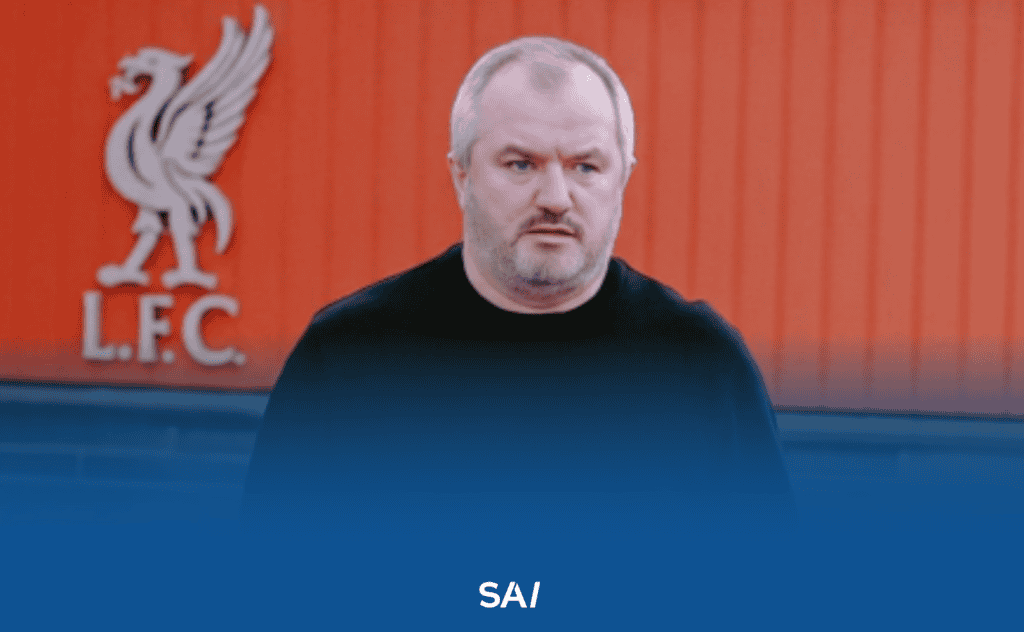
A midfielder, Vlado Lemic played for Borac Banja Luka and then in Belgium, where he met Eric Gerets. He followed Gerets to PSV Eindhoven in 1999 and began working on transfers at that point. He then became a well-known behind-the-scenes figure in European soccer, notably in connection with Luka Modrić's move to Real Madrid and Alexander Isak's move to Liverpool F.C.
Vlado Lemic does not hold a FIFA agent license and works as a sporting advisor alongside licensed partners. His career path nonetheless highlights the importance of networking and on-field experience in this industry.
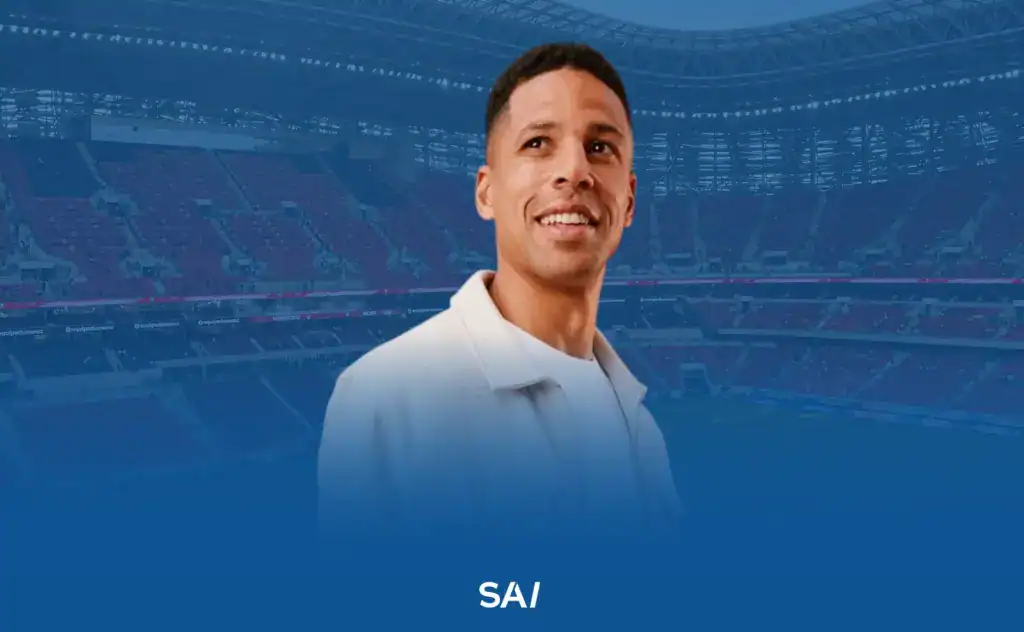
A former Premier League center-back, Curtis Davies played professionally for more than twenty years before retiring in August 2024. His career transition began as early as 2020, when he earned a bachelor's degree in Sports Writing and Broadcasting while still playing for Derby County F.C.
He is now registered as an agent with The Football Association, affiliated with Unique Sports Group, and represents players including Eiran Cashin, his former teammate at Derby County F.C.
A former player who obtains their license today will work under regulations that are changing rapidly. On June 10, 2026, the Bureau of the FIFA Council approved a new version of the RSTP, which will come into force on January 1, 2027. FIFA describes this reform as the most significant since the regulations were adopted in 2001.
This new edition is a direct response to the Diarra ruling, handed down by the Court of Justice of the European Union in October 2024, which had undermined several rules governing a player's termination of contract. Rather than amending a single article, FIFA negotiated the entire text with FIFPRO, the European clubs represented by the EFC, and the leagues grouped within the WLA, with the involvement of UEFA and CONMEBOL. A memorandum of understanding signed the same day between FIFA and FIFPRO establishes a social dialogue platform running until 2031, tasked with discussing any future changes to the regulations.
In substance, the reform overhauls how compensation for breach of contract is calculated, adjusts the rules applicable to contracts for minor players, and introduces a shared governance model for future amendments to the text. A circular published on September 1, 2026, clarified the final adjustments made to the regulations, the Disciplinary Code, and the Procedural Rules Governing the Football Tribunal.
For a former player going through a career transition, the key is less about memorizing every detail of the new text than about understanding this change in approach. The RSTP is no longer drafted by FIFA alone. It is now shaped through negotiation with representatives of players and clubs, which suggests regular adjustments in the years ahead.
A former player enters the sports agent business with firsthand experience of soccer and of the relationship between a player and their representative. This experience can make it easier to understand what a player expects and to build a relationship of trust.
However, it replaces neither legal skills nor the exam. The transition from soccer player to FIFA agent can be prepared before the end of a playing career to get a head start, but it also remains possible afterward. The next exam cycle is expected in spring 2027, with no official date announced yet.
The regulatory framework also continues to evolve, between the new RSTP expected on January 1, 2027, and the still-active suspension of the commission cap. Once the license is obtained, keeping up with regulatory changes is therefore as much a part of the job as prospecting.