Gol International: Pini Zahavi's agency, its players and its model

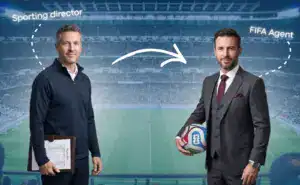
More and more football professionals are looking to move from coach to FIFA agent. Thanks to their hands-on experience, their network, and their understanding of players, coaches often possess valuable advantages to pass the FIFA exam and accompany careers in professional football.
Last updated: 03/07/2026
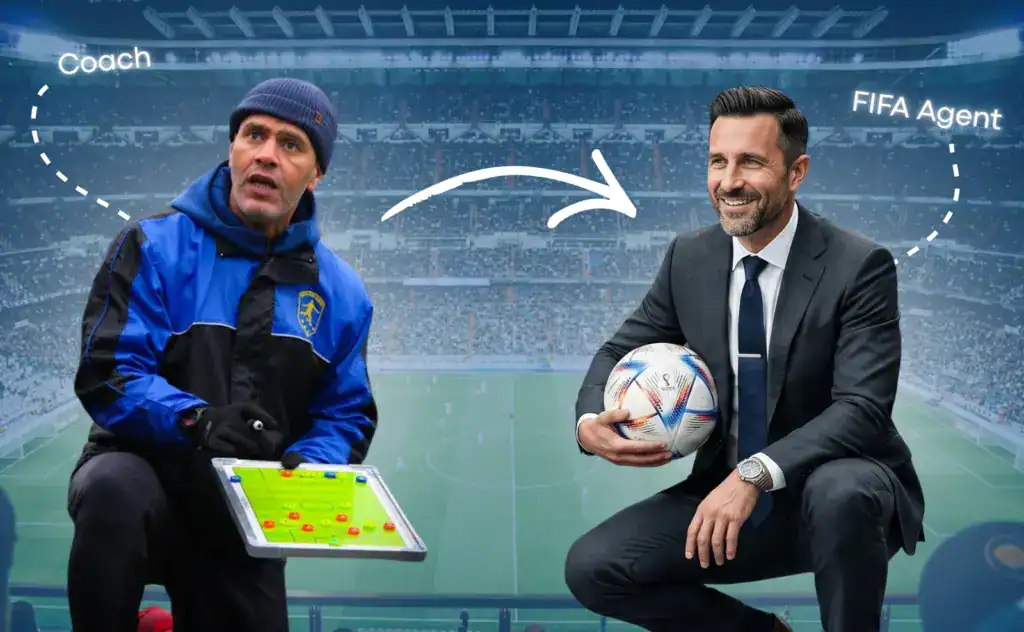
Every official FIFA agent exam session sees football coaches obtain their licence with no legal background, no sports law degree, and sometimes without ever having opened a contract law textbook in their lives.
On-pitch experience, the network built over the years, the ability to assess a player within minutes of observation, and the management of egos and pressures within professional football are all skills that the FIFA exam does not directly measure, but that the agent market values highly.
Moving from coach to FIFA agent is not a break from what came before. For many, it represents a logical continuation — a natural extension of the support and management role that some coaches already fulfil on a daily basis, without necessarily being fully aware of it.
Let us now explore why a coaching background can represent a genuine advantage in the sports agent profession and what steps are needed to make this transition successfully.
The motivations of coaches considering a career change into the agent profession are varied, but certain recurring themes emerge from the experiences of professionals who have already taken that step.
A coach works with players for a season, sometimes two. They observe them, understand them, help them develop, and then watch them move on. Becoming an agent makes it possible to extend this relationship over time and support a player throughout their entire career, from their development years through to the final stages of their professional playing career.
Few people in football deal with contractual matters as regularly as coaches. Players approaching the end of their contracts, incoming and outgoing transfers, salary negotiations and squad management are all part of their daily reality. This proximity to the transfer market can gradually spark a genuine interest in the sports agent profession.
A coaching career remains inherently unstable. Contracts are often short, dismissals are frequent, and pressure is constant. Developing an activity as an agent allows some coaches to remain within the football industry whilst building a more sustainable long-term career.
Since the FFAR (FIFA Football Agent Regulations) came into force in January 2023, the agent profession has been governed by a strict international framework. The new regulations have reshaped the market by excluding unlicensed intermediaries, creating greater opportunities for serious, competent and well-prepared professionals.
A coach wishing to become a players' agent already possesses professional skills that most FIFA exam candidates do not.
A successful agent must first and foremost know how to identify the right profiles. They must be able to assess whether a player can step up to the next level, adapt to a foreign league, or meet the tactical demands of a target club.
Coaches develop this ability every day over many years. This expertise, built through thousands of hours of observation and work on the training ground, corresponds directly to one of the most sought-after qualities in the agent profession.
The agent profession relies heavily on relationships. Sporting directors, scouts, coaches, fitness staff and medical personnel are among the people agents interact with regularly.
A coach who has worked in semi-professional or professional environments often has a network built on trust and shared experience, which represents a considerable advantage when developing an agent business.
Managing a dressing room involves constant negotiation. Discussions around playing time, managing the expectations of club executives, dealing with agents and making sporting decisions are all part of a coach's daily life.
Over time, coaches learn to stand their ground under pressure, persuade without imposing, and find compromises in sometimes difficult situations. These qualities align directly with the realities of the sports agent profession.
This is probably the most difficult advantage to quantify, but also one of the most important. A player seeking professional representation does not simply want a skilled negotiator. They also want someone capable of understanding their challenges, sporting ambitions and the realities of life on the pitch.
A former coach often possesses this understanding naturally, which can strengthen trust and improve the quality of the relationship with the players they represent.
The transition from coach to FIFA agent cannot be improvised and requires genuine regulatory learning. The good news is that the FIFA agent exam is not a law competition. It is above all a test of knowledge of FIFA regulations, their logic, their mechanisms, and their practical implications.
The exam consists of 20 questions to be completed in 60 minutes, with a pass mark set at 75%, meaning 15 correct answers out of 20. Since the 2025 session, the examination has been conducted entirely online in accordance with FIFA Circular No. 1919.
The objective is not to draft contracts or plead before a jurisdiction, but to master the texts that govern the players' agent profession.
The official pass rate for the FIFA agent exam in 2025 was 18% at international level, across a total of 7,745 sittings. This figure reflects above all a lack of structured preparation rather than any insurmountable difficulty in the FIFA regulatory texts.
Coaches, scouts, and sporting directors with no legal background obtain their licence at every session. SportsAgent Institute supports precisely these profiles with study materials designed from the official documents used in the FIFA exam and updated ahead of each new session.
The FFAR and FIFA have standardised the licence application process, and the steps are now clearly defined.
The licence application is submitted via the official FIFA agents platform. Eligibility criteria include conditions relating to good character as well as the absence of certain disciplinary records. This initial verification takes only a few minutes but determines the entire process that follows.
Before joining a preparation programme, identifying your specific gaps precisely represents an important time saving. A quick diagnostic covering all the subjects included in the official FIFA study materials allows you to focus your efforts on the areas where they are truly needed.
This is the most important step. Preparing for the FIFA agent exam goes well beyond simply reading through the regulations. It is based in particular on:
Registration is completed on the official platform agents.fifa.com according to the calendar published by FIFA. After passing the exam, with a pass mark set at 75% meaning 15 correct answers out of 20, the licence is granted once the annual FIFA membership fee has been paid.
Theory is one thing. Concrete career paths are another. Here are two profiles that illustrate, each in their own way, what the transition from coach to FIFA agent can produce when it is carried out with method and purpose.
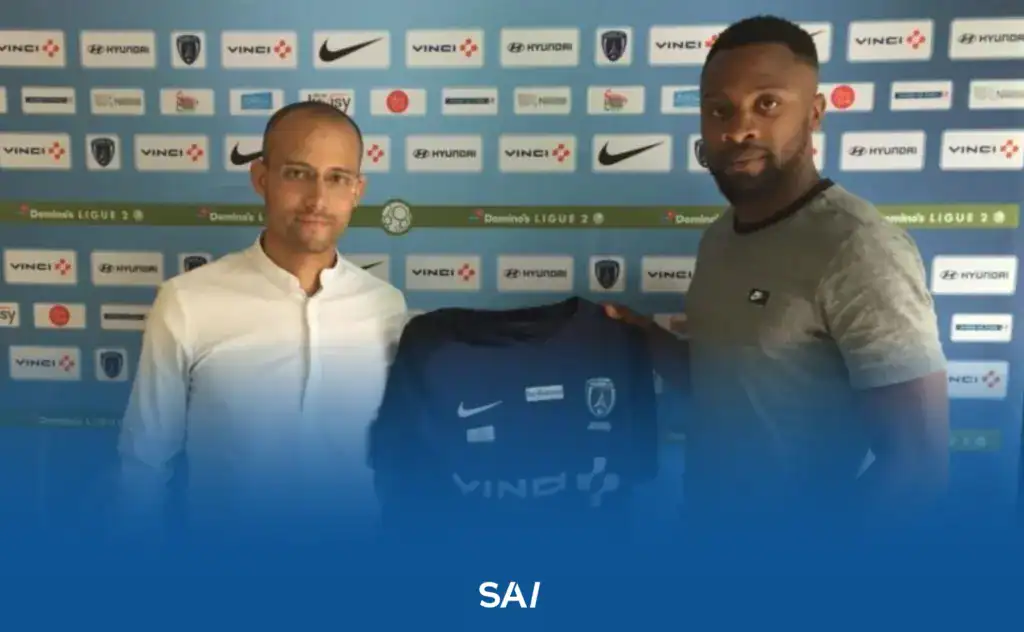
Yassine Askri represents one of the most compelling examples of this career change. His path resembles that of many coaches who came up through grassroots football. A former player in the Paris region with a stint in a professional academy at Louhans-Cuiseaux, he subsequently moved into coaching and development roles.
Educator, coach, then technical director, he gradually built a genuine expertise in identifying young talents who were sometimes overlooked by professional structures.
It was precisely this reality that triggered his transition towards the agent profession. By supporting young players in the Paris region, some of whom would go on to become internationals such as Ibrahima Konaté, future defender at RB Leipzig and then Liverpool, he witnessed the difficulties faced by certain families and the lack of proper support during the early stages of a career.
In April 2017, Yassine Askri obtained his FFF sports agent licence. He subsequently founded MyFootballConcept and quickly signed his first professional player, Ousmane Kanté, former defender at Paris FC.
Moussa Sissoko, not to be confused with the French international of the same name, also illustrates the importance of networking in the agent profession. Before becoming a player adviser and then a players' agent, he worked as an educator at several amateur clubs, notably at Saint-Jean-de-Beauvais and in the Beauvais region.
Over the years, he built a solid on-the-ground network, which subsequently allowed him to be involved in several significant operations in French football.
His most well-known client is Ousmane Dembélé, forward at PSG and for the French national team, whom he has supported since the very beginning of his career and all the way through his rise to the highest level, including during his transfer to FC Barcelona.
No. Since the FFAR came into force in January 2023, any person providing agent services must hold a valid FIFA licence. Practising without a licence exposes the coach, the player being represented, and the club involved to disciplinary sanctions before the Agent Chamber of the FIFA Football Tribunal.
Yes. The results speak for themselves. On the SportsAgent Institute platform, 97% of candidates pass the exam, regardless of their initial background. Coaches, scouts, and sporting directors with no legal training obtain their FIFA licence at every session.
Yes. The FFAR explicitly covers the representation of coaches in addition to that of players. This is a market that is often less saturated than player representation, and a former coach typically benefits from a natural credibility that is particularly valued in this context.
The transition from coach to FIFA agent is above all a change of role within the same environment, with the same contacts, the same stakes, and the same realities of professional football.
The FIFA agent exam has become a compulsory step since the FFAR reform in 2023. It demands a genuine command of the regulations, but remains accessible to anyone who prepares seriously, regardless of their academic background.
What the exam does not directly measure, however, often corresponds to the main strengths of a coach: reading the game, understanding player profiles, credibility earned on the pitch, and the network built over years spent in football.
The evolution of the market is moving in this direction. FIFA has structured the profession in order to exclude opportunistic profiles and to reinforce the legitimacy of licensed agents. This transformation naturally benefits coaches who already possess concrete football experience and a deep understanding of the industry.