Global Transfer Report 2025: Key Figures, Market Trends, and Why It Matters for Future FIFA Agents

Dive into the Football Tribunal Report 2024/25: over 21,000 cases analysed, key legal trends revealed, and essential lessons to understand FIFA governance and prepare effectively for the Football Agent Exam.
Last updated: 10/03/2026
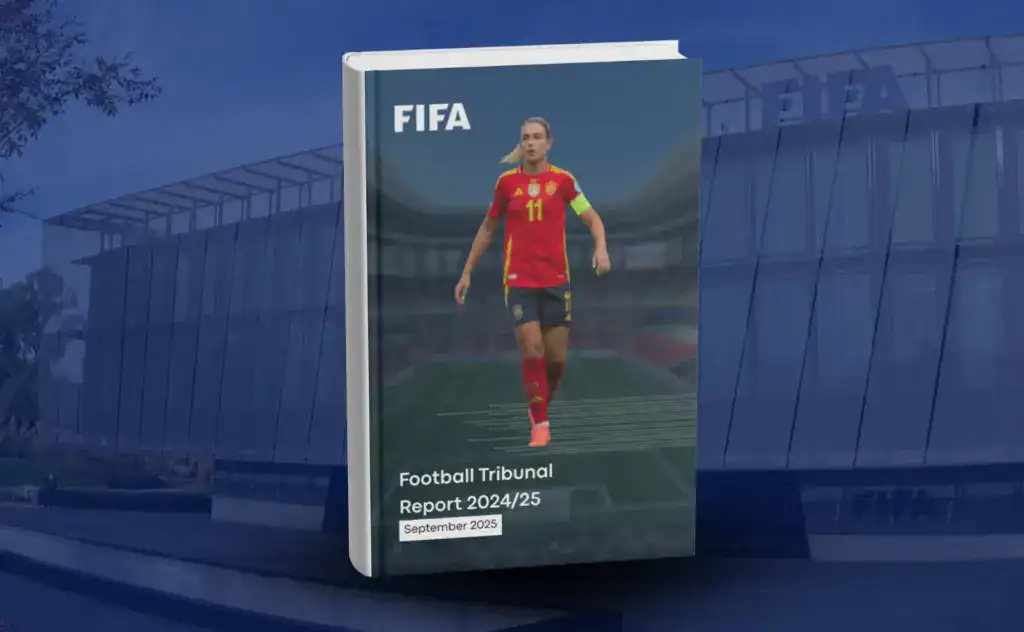
The FIFA football Tribunal Report 2024/25 has recently been published, serving as a critical reference document for understanding the governance structures and regulatory frameworks that shape international football. Far more than a technical compliance document, this report provides essential insights into how FIFA administers justice and maintains order across the world's most popular sport.
Between July 1, 2024, and June 30, 2025, the Football Tribunal handled an impressive 21,633 cases, applications, and inquiries. This substantial volume reflects not only the explosive growth of the global football marketplace but also the increasingly complex role that player agents and intermediaries play in modern player transfers and contract negotiations. For candidates preparing for the FIFA agent certification exam, this report functions as an indispensable educational tool, a barometer of emerging regulatory trends, and a gateway to deeper legal understanding within football governance.
The football Tribunal Report extends far beyond dry statistics and procedural documentation. It serves as a practical playbook for current agents and those aspiring to enter the profession, offering real-world case studies and decision-making patterns that directly inform FIFA's regulatory expectations.
The FIFA football Tribunal Report 2024/25 is a comprehensive document that illuminates how FIFA interprets and enforces its regulations in the context of player transactions, contractual disputes, and agent conduct. It essentially functions as a detailed summary of all disputes, decisions, and legal precedents that have emerged throughout the global football landscape during the 2024/25 cycle.
This report demonstrates FIFA's commitment to transparency and consistency in its regulatory framework, showcasing how the organisation addresses challenges that arise from international player mobility, complex contractual arrangements, and the growing sophistication of the football transfer market.
The 2024/25 edition of the football Tribunal Report distinguishes itself through the clarity and comprehensiveness of its conclusions. Throughout the document, FIFA highlights several pivotal developments that reshape the regulatory landscape:
These developments provide agents with actionable intelligence about the evolution of the football labor market and equip them with the foresight necessary to anticipate and mitigate legal risks in their professional dealings.
The report emphasizes that the 2024/25 season represents a watershed moment in international football governance. The FIFA Football Agent Regulations (FFAR), which officially came into effect in 2023, were subject to considerably stricter enforcement during this reporting period. Simultaneously, the dramatic rise in disputes, the accelerated digitalization of FIFA's procedural systems, and the organization's intensified pursuit of legal certainty have fundamentally transformed how FIFA manages contractual relationships and resolves conflicts between the sport's various stakeholders.
This convergence of stricter enforcement, technological advancement, and regulatory clarity creates both opportunities and challenges for agents seeking to operate ethically and effectively within FIFA's regulatory ecosystem.
The football Tribunal Report 2024/25 is methodically structured around the operations of its two primary chambers—the Players' Status Chamber and the Dispute Resolution Chamber—along with regulatory procedures governing transfers, minor player protections, eligibility determinations, and association changes. The report also dedicates substantial attention to FIFA's mediation mechanisms and mechanisms for dispute resolution.
While the Agents Chamber technically forms part of the Tribunal's structural framework, it remained inactive throughout the period covered by the 2024/25 report due to temporary suspensions of certain agent regulatory provisions.
The Players' Status Chamber handles a diverse range of disputes between clubs and coaches, as well as regulatory petitions concerning player status determinations and international mobility rights.
During the 2024/25 season, the PSC processed 986 formal claims, with a particularly notable increase in cases addressing training compensation obligations. These disputes reflect the mounting volume of legal conflicts arising from complex contractual relationships and the intricate mechanisms governing international player transfers. Training compensation cases have become especially contentious as clubs seek to protect their investment in player development, particularly when young talent moves to teams outside their current confederation.
The Dispute Resolution Chamber serves as the most frequently utilized tribunal division for employment disputes involving players and internationally active clubs.
The report documents that the DRC received in excess of 2,000 employment disputes during the 2024/25 period and successfully resolved approximately 1,800 of these matters. The overwhelming majority of disputes centered on employment contractual issues, including unpaid or withheld salaries, improper contract terminations, and breach of employment terms. These figures underscore the persistent challenges surrounding professional employment relationships within the global football ecosystem.
The Agents Chamber, which technically constitutes part of the football Tribunal's institutional structure, did not exercise any jurisdictional authority during the 2024/25 reporting period. This inactivity resulted from the temporary suspension of specific provisions within FIFA's Football Agent Regulations, reflecting ongoing efforts to refine and improve the regulatory framework governing intermediary conduct.
Mediation has emerged as a strategically critical component of FIFA's contemporary dispute resolution architecture. The organization now promotes mediation as an amicable alternative pathway, functioning as a complementary mechanism to the formal decisions and orders issued by the various tribunal chambers.
During the 2024/25 reporting period, 25 formal mediations were initiated, and the vast majority of these interventions successfully concluded with mutual agreement between disputing parties. This success rate demonstrates the significant value that mediation offers as an efficient, cost-effective alternative to protracted formal proceedings.
The statistical annexes accompanying the football Tribunal Report 2024/25 compile exhaustive numerical data representing the full scope of FIFA's regulatory activities. The tribunal and relevant FIFA departments collectively processed a remarkable 21,633 cases, applications, and inquiries:
| Topic | Volume |
|---|---|
| Total cases handled | 21,633 |
| PSC claims | 986 |
| DRC disputes | 2,032 |
| Agent/intermediary disputes | Constantly growing |
| Average resolution time | 43 days |
| Share of cases resolved through mediation | +22% |
The football Tribunal Report 2024/25 holds tremendous significance for candidates pursuing FIFA player agent certification wishing to become player agents. The fundamental objective for exam preparation is not to memorize the entire document verbatim, but rather to internalize the underlying logic that informs FIFA's decision-making processes and regulatory interpretations.
The FIFA Regulations on the Status and Transfer of Players (RSTP) and the FIFA Football Agent Regulations (FFAR) form the theoretical foundation of the agent certification exam. Mastery of these regulatory texts is absolutely essential. However, successful exam performance demands more than abstract theoretical knowledge. Candidates must simultaneously develop a sophisticated understanding of how FIFA applies these regulations within real-world scenarios and complex factual situations.
The football Tribunal Report 2024/25 employs a practical case study methodology that illustrates precisely how FIFA tribunals evaluate the enforceability and validity of player contracts, interpret unilateral contract termination rights and their legal consequences, apply training compensation and solidarity mechanism principles through FIFA's Clearing House system, and determine appropriate remedies for contract breaches. This practical approach enables exam candidates to synthesize theoretical regulatory knowledge with pragmatic legal reasoning, a capability that proves absolutely crucial for success on the certification assessment.
The FIFA agent exam deliberately structures its questions around simplified but realistic scenarios, many of which are directly inspired by actual disputes adjudicated by the football Tribunal. The 2024/25 report illustrates numerous such scenarios that candidates can expect to encounter:
By thoroughly reviewing the football Tribunal Report, candidates become deeply familiar with the specific categories of disputes that commonly arise, develop enhanced legal literacy within football governance, and cultivate analytical frameworks that enable more efficient identification of correct answers during the examination process.
The report is a clear and concise resource for analyzing the most common disputes and anticipating the questions likely to appear on the FIFA agent exam.
To download the football Tribunal Report 2024/25 PDF:

The FIFA football Tribunal Report 2024/25 provides an illuminating window into how FIFA administers its regulatory framework across real-world scenarios. With over 21,000 cases processed, it definitively establishes the critical trends currently reshaping international football law and governance.
For aspiring FIFA player agents, this report represents an indispensable document. It facilitates comprehensive understanding of the Football Tribunal's decision-making mechanisms, enables prediction of recurring legal issues, and ensures that candidates approach their certification exam with sophisticated mastery of the practical case studies that frequently inspire examination questions. In the increasingly complex world of international football player representation, the football Tribunal Report 2024/25 serves as both a foundational educational resource and a competitive advantage for those serious about achieving FIFA agent certification.