FIFA Football Tribunal Report 2025/26: A Comprehensive Guide for Aspiring Agents

Published on 10 June 2026, the January 2027 edition of FIFA's Regulations on the Status and Transfer of Players (RSTP) introduces several major developments for the transfer market: a ban on bridge transfers, a right for players to a share of transfer compensation, and new protections for female footballers. This is an update worth knowing about, though it has not yet been incorporated into the official study materials for the FIFA agent exam.
Last updated: 12/08/2026
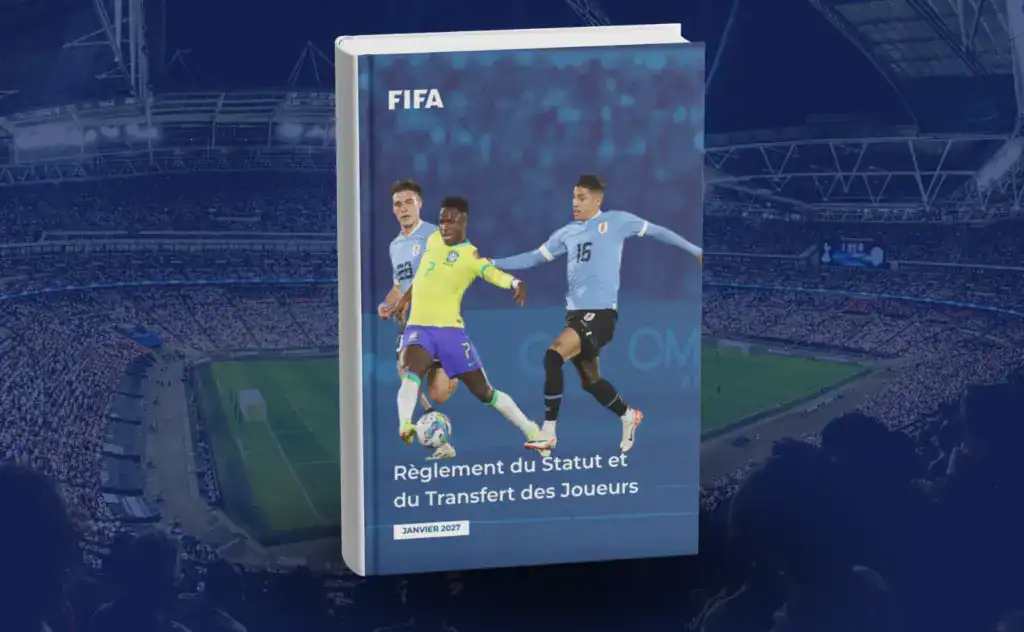
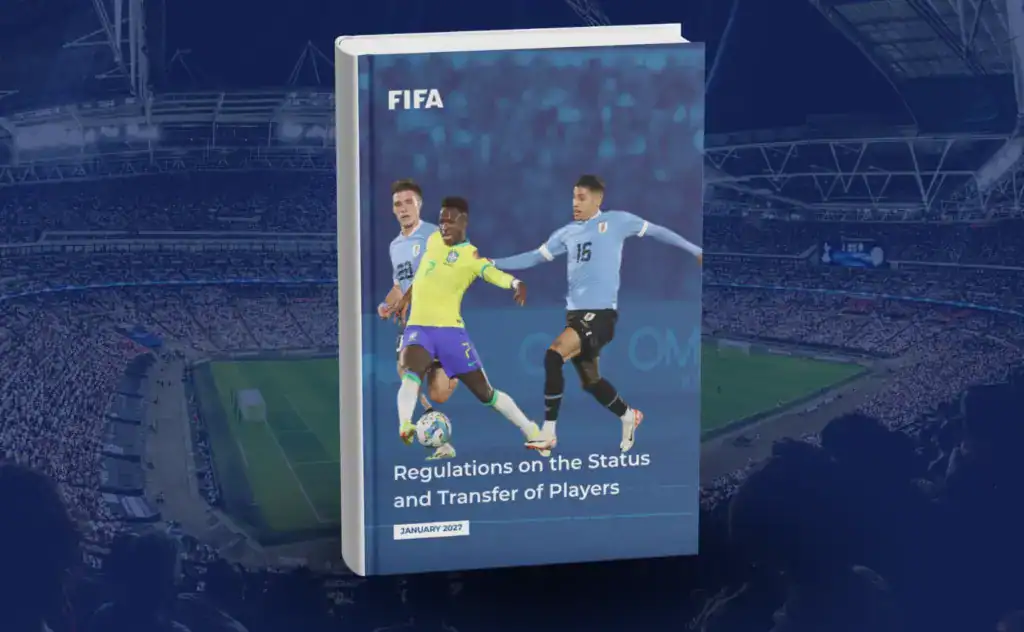
The FIFA published a new edition of its Regulations on the Status and Transfer of Players (RSTP) on 10 June 2026, which will come into force in January 2027. This document is one of the most important regulatory texts in world football, and it is one of the documents featured in the FIFA agent exam syllabus.
Candidates sitting the official exam must pay particularly close attention to this update. The January 2027 version has not yet been incorporated into FIFA's official study materials, which means it does not yet form part of the exam syllabus.
The changes brought about by the FIFA RSTP reform are worth knowing, both for candidates and for licensed agents practising on a day-to-day basis.
No. At present, FIFA's official study materials for the agent exam still reference the previous version of the RSTP as the source text. FIFA regularly updates its regulations, but the exam is based on the version of the documents contained in the study materials.
This is not unique to the RSTP; the same pattern was observed when the FIFA Disciplinary Code 2026 was published.
What matters for the FIFA agent exam is that the version of the documents to revise for the exam is the one indicated in FIFA's official study materials.
The official text of the Regulations on the Status and Transfer of Players, January 2027 edition, is available with every update on the official FIFA Documents page. You can also download it directly below:

Since the FIFA Football Agent Regulations (FFAR) came into force in 2023 and the numerous developments in women's football, FIFA has carried out several regulatory updates. The Regulations on the Status and Transfer of Players evolve with each new edition to incorporate changes observed in the sector, decisions handed down by the Football Tribunal, and FIFA's policy direction.
This edition also builds on the Diarra case, which led FIFA to revise certain provisions of the transfer system in order to bring them into line with European Union law.
FIFA worked on this text in consultation with organisations representing players, clubs and leagues, including UEFA and CONMEBOL, with the ambition of moving the system towards a form of international collective agreement in football, with FIFA positioning itself as the guarantor of the framework rather than as a simple unilateral regulator.
Ahead of this, a temporary regulatory framework was adopted at the end of 2024 to secure the transition period, without prejudging the final amendments to the RSTP.
The January 2027 edition forms part of this continuity, comprising several additions, some of which are entirely new to the FIFA regulatory corpus.
Here are the most significant changes introduced by the new edition of FIFA's Regulations on the Status and Transfer of Players.
The reform also touches on more technical matters such as the rules governing compensation for breach of contract, joint and several liability, inducement to breach of contract, International Transfer Certificates, and proceedings before the Football Tribunal.
This is one of the most significant developments for the transfer market. The FIFA RSTP 2027 introduces a new Article 5bis banning bridge transfers, meaning transfers designed to circumvent the regulations.
The text establishes an automatic presumption. If two consecutive transfers of the same player occur within a 16-week period, the parties involved are presumed to have taken part in a bridge transfer, unless proven otherwise. Sanctions are issued by the FIFA Disciplinary Committee in accordance with the FIFA Disciplinary Code.
The RSTP 2027 adds an entirely new article, 18quinquies, dedicated to the menstrual health of female footballers. Clubs are now required to accommodate players' needs relating to their menstrual cycle. On presentation of a medical certificate issued by a gynaecologist or specialist doctor, a player is entitled to be absent from training or a match. She retains her full remuneration during this period of absence.
This is a new right, with no equivalent in previous editions of the RSTP.
Article 18quater, which already existed within the RSTP, has been significantly strengthened. It now covers pregnancy, adoption and family leave for female players. Three key points to note:
The RSTP 2027 creates a new Article 21bis establishing players' right to a share of transfer compensation. This mechanism applies compulsorily within the context of international permanent transfers for players who receive a fixed annual remuneration of less than €150,000 at their current club.
| Condition | Detail |
|---|---|
| Remuneration threshold | Less than €150,000/year (fixed) at current club |
| Statutory rate | 5% of the fixed amount of the transfer compensation |
| Possibility of partial waiver | Yes, within certain limits defined by the regulations |
| Payment where instalments apply | Pro rata of the instalments received by the selling club |
This mechanism may be set aside where national law prohibits it, where an applicable collective bargaining agreement provides for an equivalent arrangement, or where an agreement establishes a similar system at national level.
For players aged 21 and under, the maximum trial period is set at eight weeks (consecutive or otherwise) per club, per season. For players over the age of 21, this cap is reduced to three weeks. A FIFA Trial Form must be submitted by the club in the TMS no later than ten days before the start of the trial.
For a player agent active in the transfer market, the changes brought by the RSTP 2027 carry immediate practical implications.
Article 5bis on bridge transfers requires heightened vigilance in structuring deals. A rapid double move involving the same player can now expose all parties involved to an automatic disciplinary investigation. Agents handling successive transfers for a player within a short timeframe need to anticipate this presumption.
Articles 18quater and 18quinquies create new rights that agents representing female footballers must fully understand. These are contractual arguments and legal protections to be factored into any negotiation involving a professional female player.
Article 21bis changes the landscape for transfers involving players in second-tier leagues, often a significant part of the portfolio for agents early in their careers. The 5% payment to the player is mandatory and must be factored in when negotiating the overall transfer fee.
Beyond these specific articles, the new framework reshapes the overall logic of the system. For an agent, the legal certainty of transfers and contract terminations becomes a central concern, as does the interplay between the RSTP, the Football Tribunal and procedural rules, which directly affects the handling of disputes.
Bringing the system into line with European Union law may also have practical effects on the drafting of agreements, contractual clauses and the management of disciplinary risk.
The version to revise for the FIFA agent exam is the one contained in FIFA's official study materials as updated by FIFA, not the most recently published version.
| Version | Status |
|---|---|
| RSTP July 2025 edition | Reference version in the current study materials, to be revised for the official exam |
| RSTP January 2027 edition | Published, but not yet incorporated into the official study materials |
This distinction is fundamental to exam preparation. The 20 questions in the FIFA agent exam are drawn directly from the texts contained in the official study materials, so it is currently the 2025 version of FIFA's Regulations on the Status and Transfer of Players that needs to be revised for the exam.
Revising a version that has not yet been incorporated into the exam syllabus proves counterproductive, but understanding the changes brought by the RSTP January 2027 remains useful for anticipating upcoming developments and preparing for the practical realities of working as a sports agent.
The publication of the FIFA RSTP 2027 demonstrates that the pace of regulatory change in world football remains steady. Some of these developments, such as the right to a share of transfer compensation or the strengthened protections for female players, carry direct practical significance for any agent currently in practice.
For exam candidates, it is essential to revise the version incorporated into FIFA's official study materials. As soon as the RSTP published in January 2027 officially forms part of the syllabus, SportsAgent Institute's resources will be updated accordingly.
In the meantime, the developments in this edition offer a concrete glimpse of the issues that future sports agents will need to manage throughout their careers.