Gol International: Pini Zahavi's agency, its players and its model

The sporting director's role places a club executive at the heart of the same operations as a player agent, with the negotiation of employment contracts, the management of a wage bill and the monitoring of transfers. Since the FFAR came into force in January 2023, practising player representation requires a licence, a pass in the FIFA agent exam and compliance with strict conflict-of-interest rules, which are particularly restrictive for a profile coming from a club.
Last updated: 25/09/2026
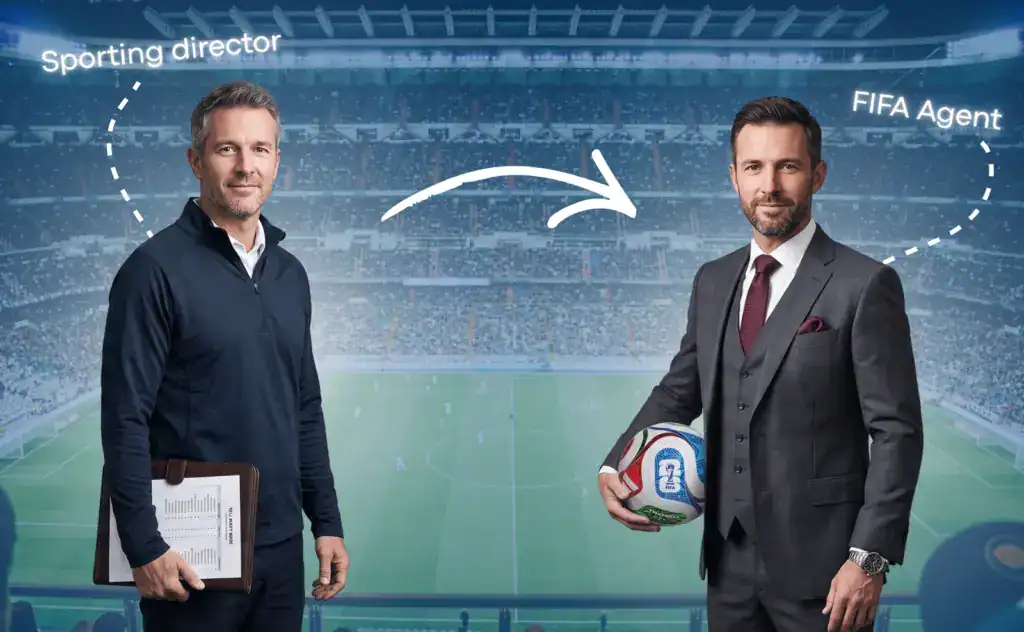
A sporting director spends their days doing what a player agent also does. Negotiating a contract term, weighing up a signing-on bonus against a fixed salary, assessing what a wage bill can absorb, or seeing a transfer file through to signature. The difference lies mainly in the role each party plays during negotiations.
Moving from sporting director to FIFA agent is therefore more a matter of taking on a new role and adjusting to a new legal framework than of learning a new profession. Since the FFAR (FIFA Football Agent Regulations) came into force in January 2023, player representation has required a licence, a pass in an official exam and compliance with conflict of interest rules that target club-based profiles precisely.
Let us now take a closer look at what a club executive can carry over from their experience, what the regulations prohibit, and how to approach the FIFA agent exam with this kind of background.
Sporting directors who wish to retrain as a football agent do not all do so for the same reasons, but four motives come up regularly. The nature of the mandate, the exposure attached to the role, the pay ceiling and the recent restructuring of the profession. None of them is enough on its own; it is their accumulation that triggers the decision.
A sporting director defends an institution. Every contract they sign is designed around a sporting need and a budgetary constraint, and they regularly conclude deals they consider questionable in sporting terms because the club's financial balance demands it.
A FIFA agent does the opposite. They follow a career across several cycles, and their objective does not depend on one team's results. This shift from a collective mandate to an individual mandate is often the main motivation.
Job stability in this function remains limited in professional football. A change of president, a relegation or a run of poor results is often enough to prompt a reorganisation of the sporting structure, and the sporting directorship is among the roles most exposed to these movements.
Publicly available data on this role remains limited, and the figures reported vary widely from one tier to the next. Salary expectations for a sporting director in the EFL are generally placed between £70,000 and £200,000 per year, while Premier League sporting directors are typically reported in a £200,000 to £2 million band depending on the club.
Read in isolation, those amounts look like anything but a ceiling. The constraint is structural rather than numerical, and it rests on three points:
A licensed agent is remunerated through service fees. That model carries more risk at the outset, but its earning potential is tied directly to the deals completed rather than to the division an employer happens to be in.
The FFAR brought the era of unlicensed intermediaries to an end. Practising this profession now requires an individual licence, an official exam and registration on the FIFA Agent Platform. For a club executive used to a club's compliance requirements, this tightening mainly removes opportunistic competition.
A sporting director is not discovering the player contract; they negotiate several of them each season. Fixed salary, performance bonuses, or a termination payment — every parameter is familiar to them as a genuine point of discussion rather than a theoretical notion. They therefore approach the syllabus through the way FIFA regulates mechanisms they already handle in practice.
Few profiles are able to assess quickly whether an offer can fit within a club's financial capacity. A sporting director does this constantly, taking into account the weight of a salary within the overall envelope and the amortisation of a transfer fee. This reading makes it possible to optimise a request in a credible way.
A club executive's network sits on the decision-makers' side, with presidents, other sporting directorships and recruitment departments. This contact book opens the doors of the people who sign. It also calls for vigilance, since those same contacts become counterparties the moment the former executive represents a player.
A sporting director follows a complete operation, from identifying a target to registering the player. Registration periods, the International Transfer Certificate (ITC), declarations in the Transfer Matching System (TMS), coordination with the releasing club — these steps make up their day-to-day administrative work.
| Skills gained as a sporting director | Transfer to the agent's profession | What the FIFA exam additionally requires |
|---|---|---|
| Negotiating employment contracts | Drafting the representation agreement | Mandatory clauses and the maximum two-year term set out by the FFAR |
| Managing the wage bill | Calibrating an offer and the associated service fee | Service fee caps applicable according to the client represented |
| Handling incoming and outgoing transfers | Positioning a player within a market | RSTP rules on registration periods and the ITC |
| Relations with presidents and sporting directorships | Direct access to the decision-makers in a transaction | Identifying conflicts of interest within the meaning of the FFAR |
| Applying internal compliance procedures | Reporting obligations on the FIFA Agent Platform | Proceedings before the Agents Chamber of the Football Tribunal |

The FFAR also imposes a fiduciary duty. The football agent must act in all circumstances in the best interests of their client. For a former sporting director, used to arbitrating between several interests within a club (player, squad, budget), this shift towards an exclusive and personal mandate changes the very nature of the decision.
The sporting director's role prepares you for negotiation and for the administrative follow-up of a transfer, but it leaves aside three central skills of the agent's profession.
Building a player's career plan over three to five years, incorporating the choice of clubs, media exposure and the family project. Packaging the player — video showreel, data pack, positioning with recruiters — a skill set far removed from a club's day-to-day work. Managing income outside salary — sponsorship, image rights, personal brand — an entire strand of the agent's profession that a sporting director never practises while in post.
This is the point that candidates from clubs most underestimate. The FFAR starts from the principle that the same person cannot serve two opposing interests in a single operation, a logic that targets executive profiles directly.
Article 5 of the FFAR sets out the eligibility conditions for the licence. A person who holds an official position or employment within FIFA, a confederation, a member association, a league or a club is not eligible. A serving sporting director cannot therefore hold an agent licence while retaining their duties.
The same article rules out other cross-holding interests, notably holding an interest in a club, and requires the absence of agent services provided without a licence during the period preceding the application. Career change therefore requires a clean break from the club before practising as an agent.
The principle set out in article 12 of the FFAR is that an agent provides their services to only one client in a given transaction. The only exception permitted concerns dual representation of a player and the club signing them, in other words the engaging entity, provided that both clients have given their explicit, written and prior consent.
| Configuration within the same transaction | Permitted | Condition or basis |
|---|---|---|
| Representing the player only | Yes | General principle of one client per transaction |
| Representing the player and the acquiring club (engaging entity) | Yes | Explicit, written and prior consent of both clients |
| Representing the player and the releasing club (releasing entity) | No | Prohibited configuration |
| Representing both clubs in the operation | No | Prohibited configuration |
| Representing all three parties | No | Prohibited configuration |
For a former club executive, vigilance applies to situations where closeness to a club could give rise to the appearance of a dual mandate. The regulations reason on a transaction-by-transaction basis, not by general relationship.
The FFAR also governs the agent's remuneration — service fee caps according to the client represented, rules on who may pay, and obligations of transparency and invoicing via the FIFA Agent Platform. For an executive used to negotiating salaries and bonuses on the club side, this part of the regulations calls for learning in its own right, because it overlaps with no aspect of the sporting director's role.
The FFAR imposes traceability of operations and the declaration of transactions on the FIFA Agent Platform. Breaches fall within the remit of the Agents Chamber of the Football Tribunal, whose functioning is described by the Procedural Rules Governing the Football Tribunal. This text and the FIFA Football Agent Regulations both appear on the official exam syllabus, in the edition of the study materials in force.
The exam consists of 20 multiple-choice questions to be completed in 60 minutes, with a pass mark set at 75%, that is 15 correct answers out of 20. Since the 2025 session, it has been held entirely online following FIFA Circular no. 1919.
The official pass rate was 18% in 2025 at international level, across 7,745 attempts. Experience gained at a club helps in understanding the mechanisms of the profession, but a sporting director also works with national practices and negotiating habits, whereas the exam is based on FIFA's regulations. Answering on the basis of experience rather than the regulations is therefore among the most frequent causes of failure among experienced profiles.
Among candidates who prepare on the SportsAgent Institute platform, 97% pass the exam. The courses and explanations written by sports law specialists cover every document on the syllabus, the practice questions tests check memorisation text by text, and the mock exams reproduce the official exam conditions.
The transition calls for a particular kind of organisation, since an executive cannot practise under licence while remaining in post. A few reference points structure the process.
The notice period, any non-compete clause and the effective departure date determine the moment when the licence application can be submitted.
An executive knows the decision-makers, but not always the players and those around them. It is therefore necessary to identify carefully the relationships that can be useful in the player agent's profession.
The workings of the FIFA Agent Platform govern the application, the exam registration and then the declarations.
The FIFA agent licence allows you to operate internationally, but certain operations carried out in France remain subject to the French Football Federation's (FFF) sports agents regulations. An executive who has spent their career at a French club must factor in this dual regulatory layer from the moment they start preparing their file.
The official study materials bring together all the documents on which the exam questions may be based, some of which go beyond the scope of a sporting directorship.
The schedule of an executive still in post or working out their notice calls for revision in short, regular sessions rather than preparation concentrated into a few weeks.
Two career paths illustrate the move from an executive role to player representation, in two different eras and two different countries, but with one thing in common: having known clubs from the inside.
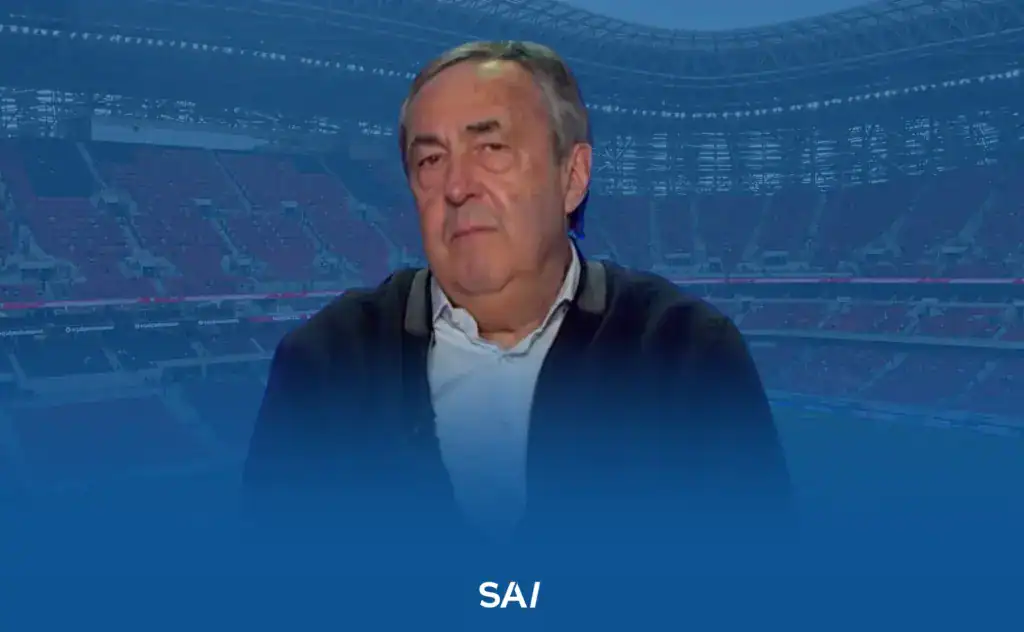
General manager of Olympique de Marseille from 1989 to 1994, Jean-Pierre Bernès operated at the highest level of French football before turning to player representation. Struck off by the French Football Federation, he was reinstated by FIFA in 1996, then obtained his agent licence in 1999.
He became one of the most influential agents in Ligue 1, with a portfolio including Didier Deschamps, Franck Ribéry, Samir Nasri and Nabil Fekir. His career shows how an in-depth knowledge of how a club operates can become a real asset in negotiations.
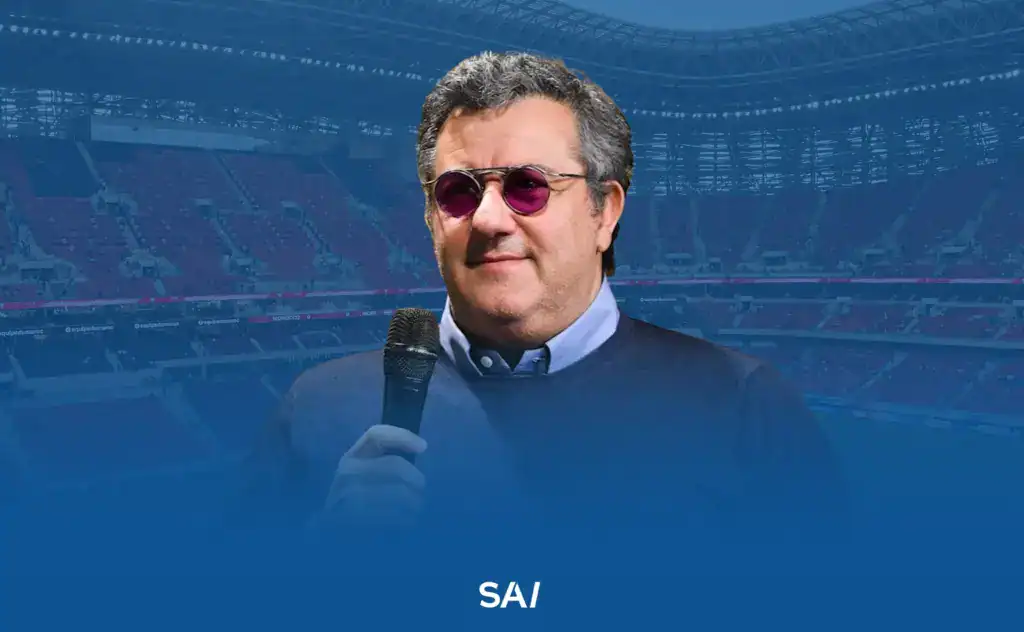
Before building one of the most powerful portfolios in world football, Mino Raiola held the position of sporting director at the Dutch club HFC Haarlem. This experience as a club executive, rarely highlighted, precedes his entire career as an agent.
That experience gave him an understanding of the balance of power between clubs, which subsequently proved a genuine asset in his work as an agent.
A sporting director starts out with experience that few licence candidates can claim. They know contracts, the constraints of a wage bill, the stages of a transfer and the decision-makers involved in an operation. This background therefore gives them a head start in understanding the agent's profession.
But that experience is not enough to pass the exam. The FFAR imposes a clear separation from executive duties, governs multiple representation and sets precise rules for entering the profession.
For a club executive, the main challenge is therefore to set aside their professional habits in order to answer on the basis of FIFA's texts. It is this ability to move from experience to regulation that makes all the difference on exam day.