
Alan Redmond, the agent who runs football at Roc Nation Sports

Kia Joorabchian is an Iranian-British businessman who has become one of the most influential intermediaries in football. A former president of Media Sports Investments (MSI), he was at the heart of Carlos Tevez and Javier Mascherano’s arrival at West Ham United F.C. in 2006, and later of transfers such as Philippe Coutinho’s move to FC Barcelona in 2018. Yet he is not a licensed agent. He presents himself as an adviser to players and clubs.
Nicknamed a “super-agent” by the English press, Kia Joorabchian built his career outside the traditional routes. He never played football, never sat an agent exam and made his fortune in finance before turning his attention to the game.
His career is particularly instructive for candidates preparing for the FIFA agent exam. The Tevez affair exposed the excesses of TPO (third-party ownership) and contributed to the tightening of the rules, now set out in the RSTP (Regulations on the Status and Transfer of Players). His status as an unlicensed adviser also illustrates the line drawn by the FFAR (FIFA Football Agent Regulations) between influence and official representation.
Kiavash Joorabchian, known as Kia Joorabchian, was born on 14 July 1971 in Tehran. His family left Iran after the 1979 revolution, lived in the United Kingdom and Canada, and then settled in England when he was around 16. He holds Iranian, British and Canadian nationality.
After studying chemistry and management at Queen Mary College in London, which he left in his second year, he first worked for his father, a car dealer, and then as a trader on the International Petroleum Exchange in London. In the late 1990s, he founded the investment company American Capital in New York, which acquired 85% of the Russian daily newspaper Kommersant in 1999.

Kia Joorabchian does not hold an agent’s licence. He presents himself as an adviser to players and clubs and works with Nojan Bedroud, a licensed agent, within his company Sports Invest UK.
This investor profile explains his approach to football. For Kia Joorabchian, a player is not only a client to be represented but also an asset whose value can be developed, which led him to take an early interest in footballers’ economic rights.
In 2004, Kia Joorabchian created Media Sports Investments (MSI) and signed a ten-year partnership with Corinthians, one of Brazil’s biggest clubs. MSI provided approximately €28 million ($35 million), including approximately €16 million ($20 million) to clear the club’s debts, in exchange for 51% of its future profits.
The fund financed high-profile signings, including Argentina’s Carlos Tevez, bought from Boca Juniors for approximately €18 million ($22 million), followed by Javier Mascherano. Corinthians won the Brazilian championship in 2005. However, the relationship quickly deteriorated: the club broke with MSI in 2007 and ended the year with relegation. In Brazil, proceedings were brought against Kia Joorabchian before being dropped in 2014.
In August 2006, Carlos Tevez and Javier Mascherano joined West Ham. Their economic rights did not belong to the club but to companies linked to MSI, which Kia Joorabchian continued to represent even though he had stepped down as the fund’s president in June 2006.
In April 2007, the Premier League fined West Ham a record €8 million (£5.5 million). The club had not declared these agreements, which gave third parties decisive influence over the players’ futures. No personal sanction was imposed on Kia Joorabchian.
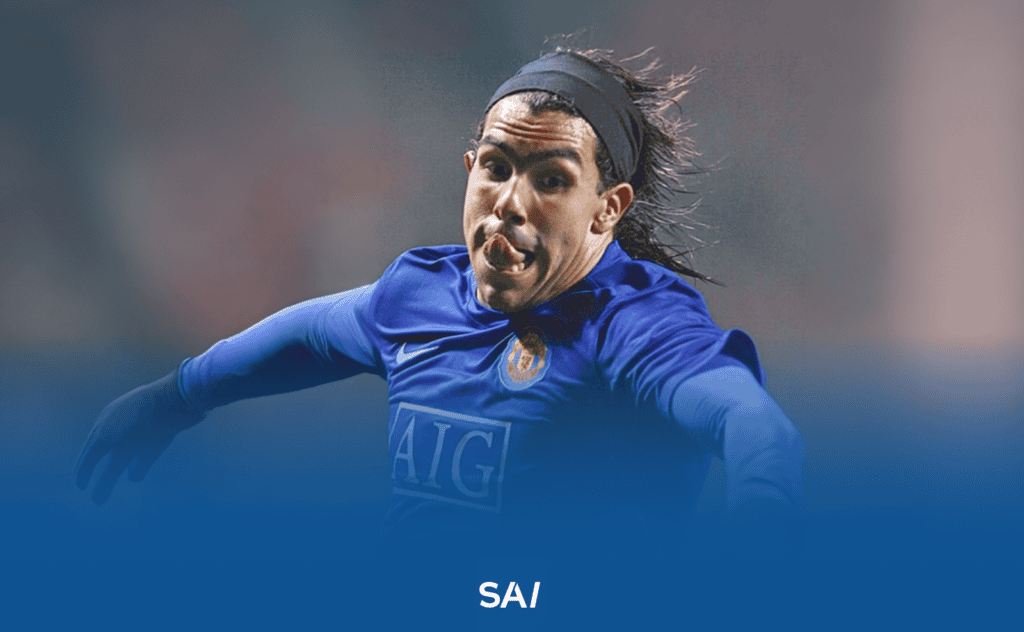
Saved notably by Tevez’s goals, West Ham stayed up, while Sheffield United F.C. were relegated. The Yorkshire club took legal action and, in 2009, obtained a settlement of approximately €22 million (£20 million), paid by West Ham over five years. Tevez then joined Manchester United F.C. in 2007 on a two-year loan, followed by Manchester City F.C. in 2009.
From the creation of MSI to the worldwide ban on TPO, the affair spans more than ten years. The table below traces its main stages and their consequences for clubs and for the regulations alike.
| Date | Event | Consequence |
|---|---|---|
| 2004 | Creation of MSI and partnership with Corinthians | Arrival of Tevez, then Mascherano, in Brazil |
| August 2006 | Tevez and Mascherano join West Ham | Economic rights held by third-party companies |
| April 2007 | West Ham fined €8 million (£5.5 million) | Third-party agreements not declared to the Premier League |
| 2009 | Settlement between West Ham and Sheffield United | Approximately €22 million (£20 million) paid over five years |
| 1 May 2015 | Article 18ter of the RSTP comes into force | Worldwide ban on third-party ownership of economic rights |
After the West Ham affair, Kia Joorabchian changed his model. He no longer financed entire clubs but advised players, mainly Brazilian and South American, on their transfers to Europe. He relied on a network built in Brazil and on close relationships with several executives at English clubs.
This summary covers the main transfers Kia Joorabchian has been associated with since 2008, from Robinho to Willian. It shows the central place of Brazilian players in his business and the weight of English clubs:
| Year | Player | Deal | Reported fee |
|---|---|---|---|
| 2008 | Robinho | Real Madrid CF to Manchester City | approximately €41 million (£32.5 million) |
| 2010 | Ramires | Benfica to Chelsea F.C. | approximately €22 million |
| 2011 | David Luiz | Benfica to Chelsea | approximately €25 million (£21 million) (+ Nemanja Matić sent to Benfica) |
| 2013 | Willian | Anzhi Makhachkala to Chelsea | approximately €35 million (£30 million) |
| 2013 | Marquinhos | AS Roma to Paris Saint-Germain F.C. | approximately €31.5 million (£27 million) |
| 2018 | Philippe Coutinho | Liverpool F.C. to FC Barcelona | €120 million, up to €160 million with bonuses |
| 2019 | David Luiz | Chelsea to Arsenal F.C. | approximately €9 million (£8 million) |
| 2020 | Willian | Chelsea to Arsenal | free transfer |
Philippe Coutinho’s transfer remains his most spectacular deal. In January 2018, the Brazilian midfielder left Liverpool for FC Barcelona in one of the most expensive transfers in history.
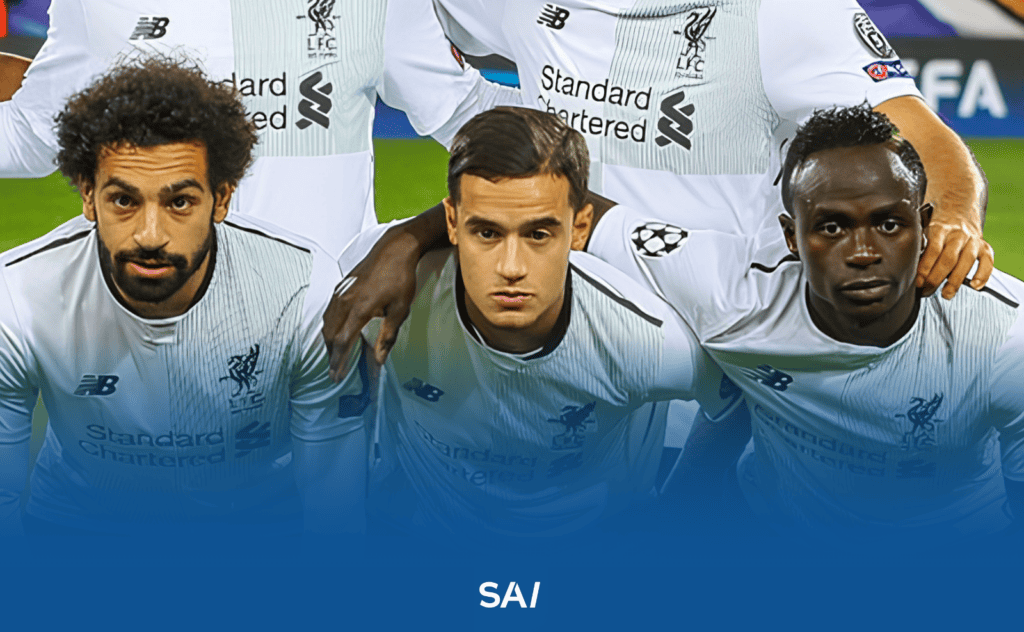
The Ramires case, for its part, shows Kia Joorabchian’s investor logic: Jazzy Limited, a company run by Joorabchian, reportedly acquired 50% of Ramires’ economic rights in June 2010 for €6 million; Chelsea then signed the player in August 2010 for approximately €22 million. This type of transaction is now prohibited.
Kia Joorabchian makes no secret of his attachment to Arsenal. His links with the club run notably through Edu, a former Gunners midfielder and one of his first clients, who became Arsenal’s technical director and then sporting director between 2019 and 2024.
During this period, Arsenal signed several players linked to Kia Joorabchian, including David Luiz in 2019, followed by Willian and Cédric Soares in 2020. These signings drew strong criticism, notably from former Liverpool defender Jamie Carragher, who saw them as evidence of the intermediary’s excessive influence over the club’s recruitment. Kia Joorabchian replied that sporting decisions were a matter for the manager, Mikel Arteta.
This pattern is not unique to Arsenal. Kia Joorabchian was a football adviser to Newcastle United F.C. in 2010 and an official adviser to Reading F.C. and its owner in 2022, while his alleged influence over Everton F.C.’s recruitment prompted protest banners from supporters at Goodison Park the same year.
Kia Joorabchian remained very active in 2026, both in the transfer market and in club takeovers.
In July 2026, the English press reported that Bruno Guimarães had enlisted Kia Joorabchian to help secure his move from Newcastle to Arsenal, alongside his long-standing representative, Alexis Malavolta, and Giuliano Bertolucci. The transfer was completed over the summer for approximately €88 million (£75 million), with a four-year contract plus a one-year option. The exact role of each intermediary in the negotiations has not been made public.
In June 2026, Kia Joorabchian appeared alongside John Textor and the Greek shipowner Evangelos Marinakis, owner of Olympiacos and Nottingham Forest F.C., in a bid to take over the SAF of Botafogo, the company that owns the Brazilian club. The club’s advisory board unanimously rejected the bid, preferring the offer from the fund GDA Luma Capital.
Kia Joorabchian’s career touches on several topics on the FIFA agent exam syllabus. Above all, it helps explain why certain rules exist.
Article 18bis of the RSTP prohibits a club from entering into a contract that allows a third party to influence its independence or its decisions on recruitment and transfers. Article 18ter, in force since 1 May 2015, prohibits a club or a player from entering into an agreement that gives a third party a right to all or part of future transfer compensation. To be checked against the official study materials for the edition in force.
Several lessons stand out for candidates:
The Joorabchian case shows that a lack of transparency can cost a club millions and permanently change the regulation of an entire sector.
Kia Joorabchian is a figure apart in football: a financier turned intermediary, without an agent’s licence but with considerable influence over the transfer market. From Corinthians to Arsenal, he has built a unique network between Brazil and England.
His career is also a lesson in regulation. The Tevez affair contributed to the ban on third-party ownership of players, and his status as an adviser is a reminder that only a licence allows someone to represent a player officially. For aspiring agents, mastering the RSTP and the FFAR means understanding the rules that emerged from these cases, ahead of the next exam session expe