Moussa Sissoko agent: who is Ousmane Dembélé's adviser?

In less than twenty years, Unique Sports Group has gone from a single-client agency to a business present across three continents, with around 600 players under contract and an American investment fund in its share capital. Its trajectory sheds light on what the football agent profession has become since the FFAR came into force.
Last updated: 11/09/2026
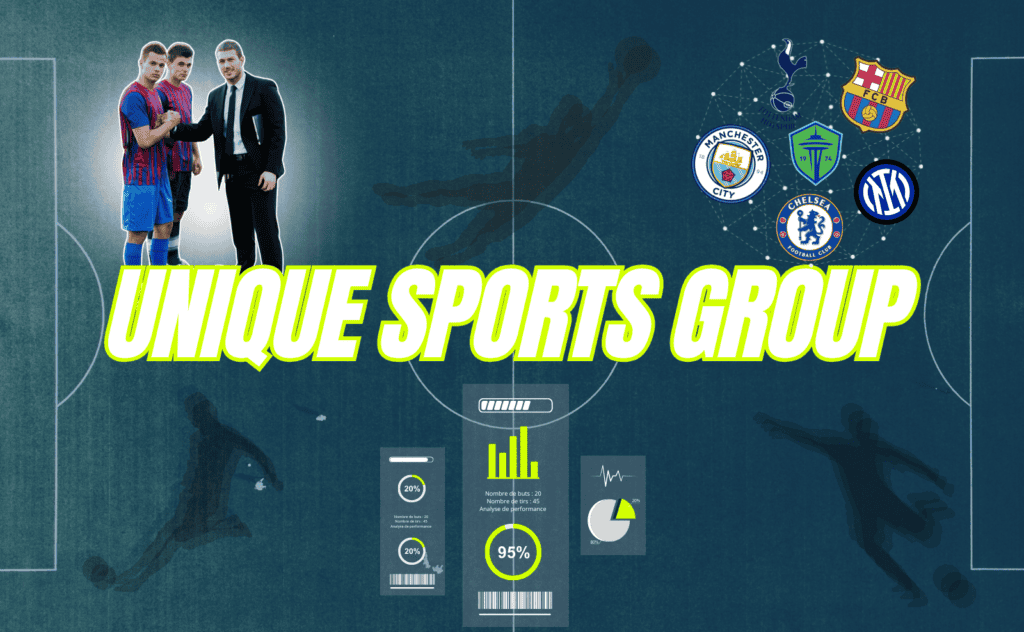
Marc Guéhi, Anthony Gordon and Maxence Lacroix all changed clubs in 2026, the first during the winter transfer window, the other two over the summer. These three transfers were handled by the agency Unique Sports Group. In less than twenty years, this organisation has moved from the status of a one-man agency to that of a player ranked among the five largest representation agencies in world football.
For a candidate sitting the FIFA agent exam, this trajectory shows how a player agency is built, how it is financed, and which functions it needs to bring in-house in order to remain competitive in a market now governed by the FFAR.
Let us now take a closer look at the trajectory of the Unique Sports Group organisation, the agency's business model and its player portfolio.
Unique Sports Group is an independent football player representation agency based in the United Kingdom. The organisation came into being in 2021 through the merger between the British agency Unique Sports Management and the German agency International Sports Management. It represents around 600 players today, for a combined market value estimated at €1.3 billion (approximately £1.13 billion).
That figure places the organisation among the most highly valued agencies on the market according to Transfermarkt, and it also ranks among the most powerful agencies in European football.
Unique Sports Group has offices across several continents, spread between London, Manchester, Karlsruhe, Barcelona, Abidjan, Dubai and Seoul, to which a French base has been added since 2026. This geographical footprint highlights its strategy of covering the players' markets of origin as much as the buying markets.
The agency's historic British entity, Unique Sports Management Ltd, is registered with Companies House under number 06732463, with a registered office at 71 Queen Victoria Street in London. The company was incorporated on 24 October 2008 and trades under SIC code 93199, corresponding to other sports activities.
The figures put forward for the number of players represented vary from one source to another. The official communication surrounding Velocity Capital's entry referred to more than 350 players and a portfolio value in excess of £1 billion.
Other specialist databases put forward a figure close to 600 players for an aggregate value of approximately £1.13 billion. This gap is explained by different calculation methodologies and by distinct measurement dates, and the higher figure should therefore be treated as an estimate rather than as officially audited data.
The Unique Sports Group organisation was initially founded in 2008 under the name Will Salthouse Management Ltd, with a single client. It took the name Unique Sports Management in 2010 and developed over a decade or so on the British market, drawing on the founder's networks within Premier League and Championship clubs.
In October 2021, Unique Sports Management merged with the German agency International Sports Management to form Unique Sports Group. The transaction brought together two independent players positioned on two of the most developed markets in Europe, the Premier League and the Bundesliga. At the time, the new agency announced more than 300 players represented and a combined portfolio value of more than €770 million (£670 million), all under the leadership of Will Salthouse and Gordon Stipic-Wipfler.
In April 2025, Velocity Capital Management announced an investment of more than USD 100 million in Unique Sports Group, with an equity stake taken in the business. The transaction is intended to support the agency's growth strategy, in particular through acquisitions, international expansion and the development of women's football.
Several specialist media outlets referred to a commitment of more than USD 100 million, a figure that Velocity Capital's press release does not explicitly confirm in its financial terms.
This equity stake is intended to allow the agency to finance acquisitions of other agencies, the opening of new offices such as the one under consideration in Miami ahead of the 2026 FIFA World Cup, the development of new verticals such as cricket, as well as data and club advisory activities.
On 1 July 2026, the agency announced the creation of Unique France, in partnership with One Team Football, a French agency founded in 1996 by Michael Manuello and Pascal Floch. Rather than creating a new agency, the transaction builds on an already well-established French organisation, which retains its local relationships and its player development model.
This transaction corresponds to a strategic investment by Unique Sports Group in the French organisation, rather than to a simple communication agreement. One Team Football retains its knowledge of the French market, its relationships with clubs, academy coaches and families, and its track record in developing young talent since 1996. Unique Sports Group, for its part, brings its British and international network, its access to European clubs and its negotiating capacity on major deals.
The first concrete example associated with this partnership is the transfer of Jérémy Jacquet, a player developed by One Team Football, to Liverpool F.C., completed with the joint involvement of Unique Sports Group and Michael Manuello.
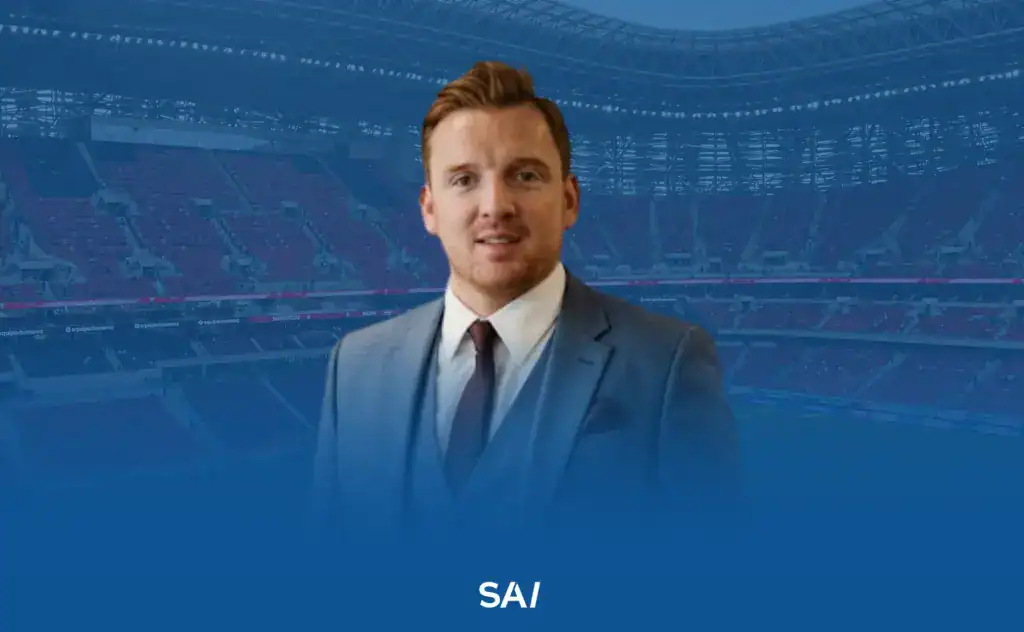
Will Salthouse is the founder and chief executive of Unique Sports Group. He set up the agency in 2008 and still runs it today, while deliberately keeping a low public profile, without regular media appearances.
He holds the FIFA agent licence and is a registered intermediary with the Football Association. Several other agents within the organisation are licensed with the English FA or the German DFB, which allows the agency to operate directly on the two markets it brought together in 2021.
Will Salthouse remains involved in the agency's biggest deals. Marc Guéhi's transfer to Manchester City F.C. last January and Anthony Gordon's move to FC Barcelona in early July were negotiated under his supervision, against a backdrop of strong competition from several European clubs.
Beyond Will Salthouse, several executives hold key positions within the agency.
| Name | Role |
|---|---|
| Gordon Stipic-Wipfler | Director Germany, former executive at International Sports Management |
| Marlon Fleischmann | Managing Director |
| Barry Whelan | Director |
| Steve Hitchen | Director of Football, former sporting director of Tottenham Hotspur F.C. |
| Ian Ryder | Head of Operations |
| Omar Ismail | Chief Financial Officer, recruited from CAA Stellar |
| John Harrower | Head of Data and Recruitment |
This allocation of roles illustrates the logic of internal specialisation discussed later in this article, with financial, operational and data functions clearly identified within the leadership team.
The agency USG represents around 600 players for a total market value estimated at £1.13 billion. Its portfolio is not limited to players, since Unique Sports Group also has a division dedicated to coaches, which includes Will Still, the new head coach of AJ Auxerre with a contract until June 2028, and Bruno Saltor, assistant coach at Tottenham Hotspur since February 2026. Other coaches are also listed in specialist databases as being part of this portfolio, among them Keith Andrews, Rob Edwards, Slaviša Jokanović, Richie Wellens and Conor Hourihane.
The recent transfers completed by Unique Sports Group demonstrate the agency's influence and activity on the transfer market.
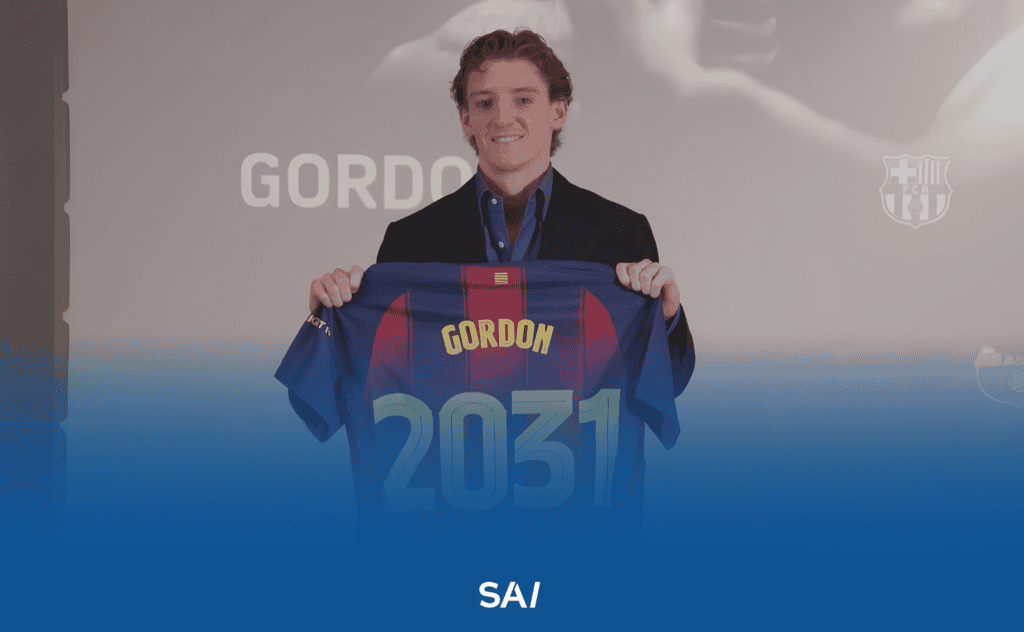
The England international winger left Newcastle United F.C. for FC Barcelona at the end of May 2026, with an official presentation on 29 May. The fee for this transfer was estimated at around £70 million, including add-ons, and Anthony Gordon signed for five seasons with the Catalan club. Bayern Munich and Liverpool F.C. were also in the running, and Will Salthouse played a central role in the final negotiation.
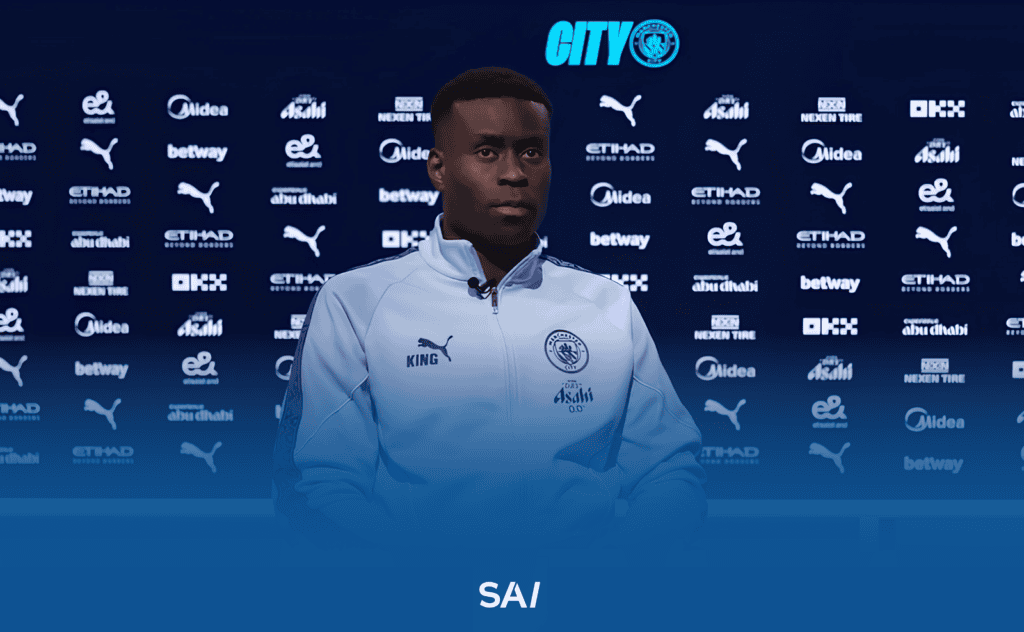
Marc Guéhi, the England centre-back, joined Manchester City F.C. on 19 January 2026 for a total fee of around £20 million, together with add-ons and a sell-on clause. The player signed a five-and-a-half-year contract, running until 2031. This deal represents an increasingly common situation on the market, that of a player in the final year of his contract whose club must choose between an immediate sale and a free departure a few months later.
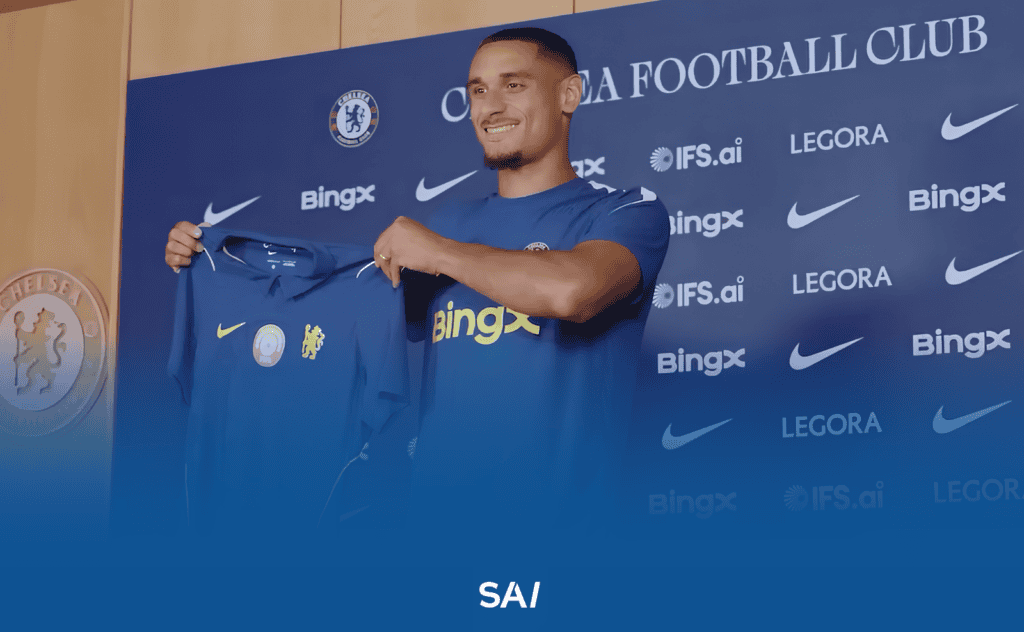
Maxence Lacroix was transferred to Chelsea F.C. on 30 July 2026, for a fee estimated at around £51 million. He signed for six seasons with the London club. Having arrived at Crystal Palace F.C. from VfL Wolfsburg in 2024 for around £15.5 million, he allows the English club to book a capital gain of around £35 million.
| Player | Position | Club (August 2026) |
|---|---|---|
| Aaron Wan-Bissaka | Right-back | West Ham United F.C. |
| Hakan Çalhanoğlu | Midfielder | Inter Milan |
| Dean Henderson | Goalkeeper | Crystal Palace F.C. |
| Callum Wilson | Forward | Brentford F.C. |
| Ethan Nwaneri | Attacking midfielder | Arsenal F.C. |
| Jonathan Rowe | Winger | Bologna F.C. |
The accounts filed with Companies House relate to the entity Unique Sports Management Ltd, and do not necessarily represent the consolidated whole of the international Unique Sports Group. On the basis of the latest available financial years:
| Financial year | Turnover | Operating profit | Operating margin |
|---|---|---|---|
| Financial year | Turnover | Operating profit | Operating margin |
| 2021 | £18.64 million | £6.48 million | 34.8% |
| 2022 | £24.70 million | £6.56 million | 26.6% |
| 2023 | £28.30 million | £6.50 million | 23.0% |
USG's turnover grows by around 52% between 2021 and 2023, while the operating margin falls over the same period.
This trend is mainly explained by an increase in administrative expenses and cost of sales that is faster than the growth in turnover. These figures come from specialist databases that pull the accounts filed with Companies House, and must therefore be read as estimates drawn from the British accounts rather than as official consolidated results for the group.
The agency operates on an integrated service model, organised around two divisions. The first brings together the sporting services, that is to say support with transfers, contract negotiation, career management, data and video analysis, medical and nutritional monitoring, and legal advice.
The second covers off-pitch activities, with commercial partners, the transition into media and broadcast, content and social media strategy, press relations and charitable commitments.
This organisation is made possible by putting dedicated teams in place within the agency. Alongside the licensed agents, there is a finance department, an in-house legal service, a data and recruitment unit with analysts and data scientists, a commercial and media division, a cricket division and local teams in Germany, Spain and South Korea.
The Unique Sports Group model highlights three lessons that are useful for future candidates sitting the FIFA agent exam.
An agency of this size rests on separate functions, among which we find law, finance and data analysis rather than pure negotiation. The agent profession therefore becomes a team profession.
The entry of a private equity fund into the share capital of a representation agency changes the way it operates. It imposes new requirements in terms of governance, compliance and reporting that align directly with the obligations set out by the FFAR on the transparency of service fees and the declaration of representation agreements.
The agency's locations depend for the most part on player transfer flows, rather than solely on the regions of the major leagues. An agent who has and masters a specific regional network holds a skill that the large organisations are looking to acquire, as the partnership with One Team Football in France has shown.
No public data makes it possible to state that Unique Sports Group applies a set average service fee. The agency's contact page does not publish a fee scale, and the actual amount depends on the representation agreement, the party represented, the country, the player's level and the structure of the transaction.
The regulatory framework set out by the FIFA Football Agent Regulations does, however, set applicable caps.
| Client represented | Cap set by the regulations |
|---|---|
| Player or coach earning up to USD 200,000 per year | 5% of remuneration |
| Player or coach earning more than USD 200,000 per year | 3% of remuneration |
| Engaging club | 3% or 5% depending on the player's remuneration |
| Dual representation permitted between player and engaging club | 6% or 10% |
| Releasing club engaging the agent | 10% of the transfer compensation |

According to FIFA, no public average service fee is known for Unique Sports Group, and the caps set by the FFAR can reach 10% of the transfer compensation for a mandate entrusted by the selling club, subject to the relevant regime and the precise terms of the representation agreement signed.
Unique Sports Group is an independent British agency born in 2021 from the merger between Unique Sports Management and International Sports Management. It represents around 600 players today for a market value estimated at £1.13 billion, from eight locations spread across three continents.
Three dates sum up the agency's journey:
This journey shows above all the transformation of the profession. A leading agency is no longer the extension of a sports agent and his contacts book, but an organisation with divisions, financed by outside investors and subject to requirements that align with those imposed by the FFAR.
For a future player agent, the challenge is not to replicate this model, which is out of reach for someone starting out in the industry, but to understand its mechanics. Mastering the FIFA regulations remains the first step, the one that determines access to the profession.